

Smoke Season
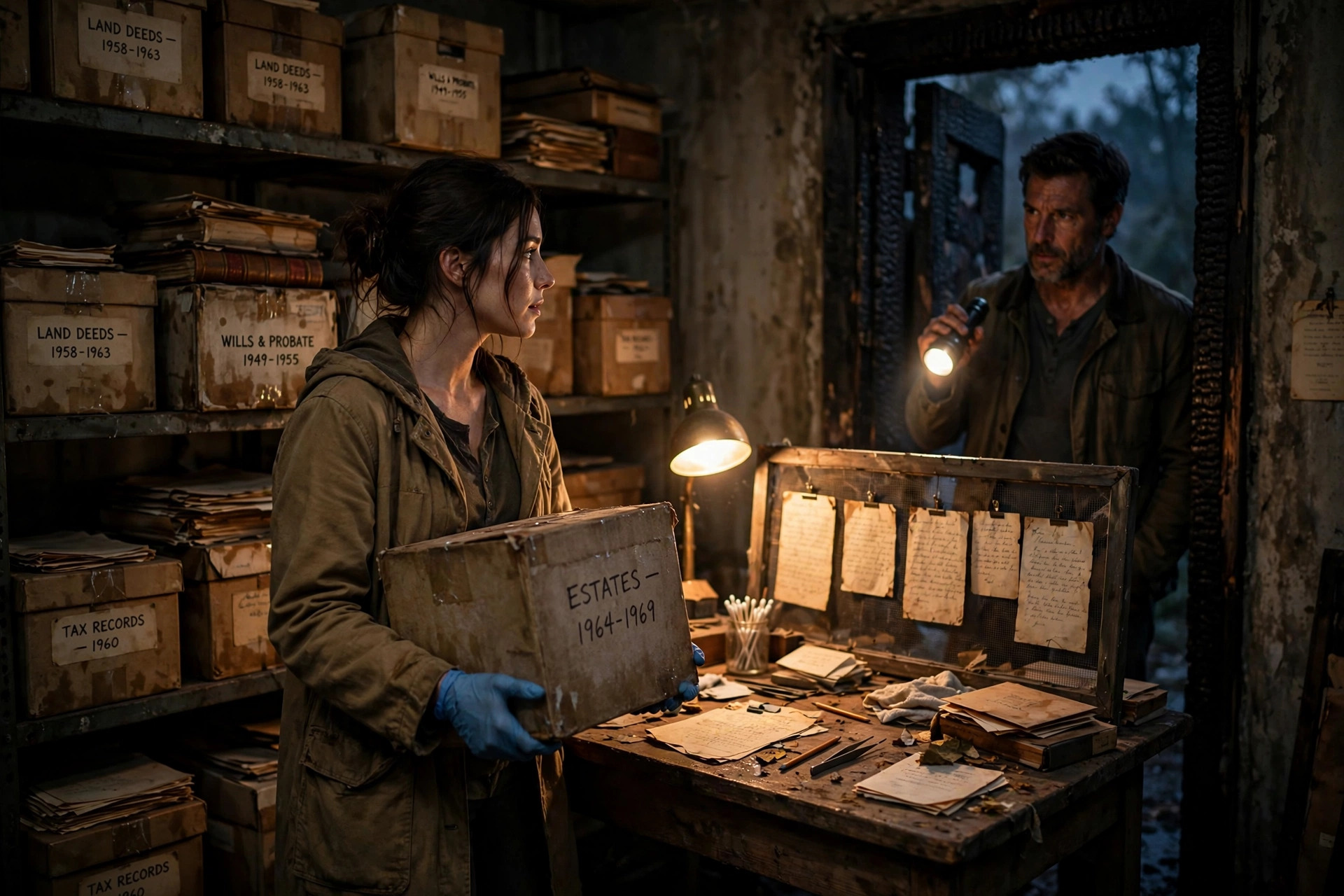
The question Mara Ashwood had been avoiding all summer finally arrived in the shape of a man carrying a clipboard: if someone was burning down her town one record at a time, who was going to stop it, and why did the only person who seemed to care have eyes that made her forget what she was protecting in the first place?
One: The Smell of Yesterday's Fire
The basement of the Calloway County Records Annex still smelled like the fire three weeks after the fire was out.
Mara noticed it the way you notice a stranger standing too close in an elevator. Smoke had soaked into the plaster, into the cardboard boxes, into the hundred year old ledgers she had spent two years coaxing back from a roof leak and a burst pipe and general civic neglect. The fire had taken the east wall and the 1913 plat maps and, briefly, her belief that this job was safe.
She climbed the stairs at six in the morning because she could not sleep, and she found him there.
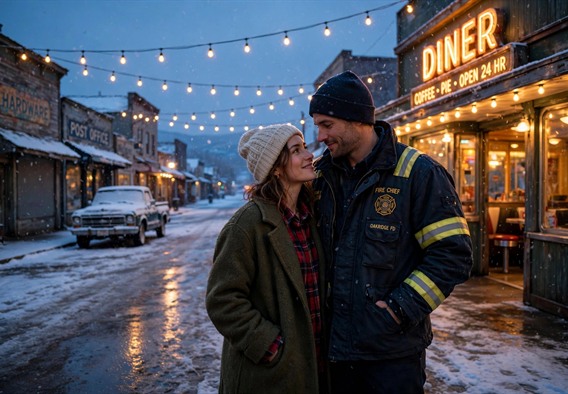
He was standing in the doorway of the burned section with a flashlight he wasn't using, hands in the pockets of a canvas jacket, studying the char like it was a letter from someone who owed him money. Broad shoulders, close cropped dark hair going gray at the temples, a jaw that looked like it had opinions. Forty, maybe. She put him at forty and then put him out of her mind, because the last thing she needed was a distraction with a flashlight.
"Annex is closed," she said. "Fire's out. You're late."
He turned. His eyes did a thing she resented immediately, a quick catalog of her that ended somewhere around her hands and stayed there. She was wearing nitrile gloves and carrying a box of smoke damaged correspondence. It was not her best look.
"Eli Vance," he said. "County fire investigator. I'm not late. I'm early. That's usually the whole trick."
"The fire was three weeks ago."
"Fires that look accidental don't usually get a second visit from me at six a.m." He said it mildly, like he was commenting on the weather, and then he looked at the box in her arms. "What's that?"
"Correspondence. 1890s to 1950s. It got water damage from the hose lines, so I'm drying it before it molds." She adjusted her grip. "You didn't answer my question about why you're here."
"No," he agreed. "I didn't."
And that was how it started, which Mara would later think was unfair. She had imagined every version of the worst summer of her life, and in none of them did it begin with a man who answered questions by not answering them, standing in the wreckage of the only thing she had left.
Two: Eli Reads a Room
Eli Vance had a rule about women who worked in ruins, which was that he did not get involved with them, because he had been one, once, and it had cost him a marriage and most of a lung's good opinion. The rule had served him well for eleven years.
He broke it slightly by coming back the next morning.
Not for her. For the burn pattern. The east wall fire had started low and hot, right behind the shelving that held the oldest land records in the county, and accelerant traces had come back on Thursday in amounts that no mouse chewing through wiring could explain. Somebody had wanted the plats gone. Specifically the plats.
He stood in the damp dark with his flashlight off and thought about who benefits. Land records in a mountain county were boring until they weren't. Boring until a resort developer wanted a right of way that didn't exist on paper, or a family wanted a boundary to quietly stop being what it had been since 1911. He had seen a fire like this once before, in a clerks office in a valley town two hundred miles south, and that case had ended with the file closed for lack of a suspect and a clerk who moved away and never came back.
The archivist was already there when he arrived, which annoyed him, because civilians in active scenes were a liability, and because she had a way of looking at him that made him want to explain himself, and he had promised himself he would never explain himself to anyone again.
"You're here early," she said. Again. Like it was a greeting between them now.
"You're here earlier."
"I live upstairs." She nodded at the narrow stairwell. "Caretaker's apartment. It came with the job. It's terrible."
"Why do you take it?"
She looked at him for a long moment, and he watched her decide how much truth to spend on a stranger. He knew the arithmetic. He did it himself every day.
"Because everything else burned," she said finally. "My apartment in Denver. Four years ago. Building fire, electrical, nobody's fault, except I lost eleven years of my own records, my mother's letters, every photograph I owned. So when this job opened, restoring a whole county's memory, I took it, and I moved into the building where the memory lives, because apparently I'm that person now."
Eli said nothing, because there was nothing to say that wouldn't cost him something. But he thought: someone burned a building with you in it once, and you don't know it, and I do, and I am not going to be the one to tell you.
"Don't touch the east shelving," was what he said instead. "Not without gloves and not without me."
"Am I a suspect?" she asked. There was no fear in it, only a kind of dry curiosity, and something in his chest turned over and he told it to sit down.
"Everyone's a suspect," he said. "That's the job. It's not personal."
"Everything's personal," Mara Ashwood said. "That's my job."
Three: What the Ledgers Said
The problem with drying ten thousand letters on window screens was that you read them. Mara couldn't help it. Correspondence from 1922 slid past her eyes on its way to the drying rack, and most of it was fence lines and road gravel and a furious fourteen page exchange about a culvert.
But the Hollis letters were different.
There were nine of them, all from a surveyor named Ambrose Hollis to the county clerk, all in the summer of 1913, and all of them used a phrase that made her sit back on her stool: the drowned line. He wrote that he had surveyed the north shore of Sparrow Lake twice and gotten two different boundaries, and that the difference was not error. He wrote that he had been paid to make the second map wrong and he refused. He wrote, in the last letter, that if anything happened to him, the correction was hidden where the records sleep.
Nothing in the file said what happened to Ambrose Hollis. The letters simply stopped.
Mara photographed all nine pages with her phone, hands steadier than she expected them to be, and then she went upstairs and made tea and did not look at the east wall, and looked at the east wall.
The fire had started behind the shelving that held, among other things, the 1913 plat maps.
She told herself it was coincidence. She was very good at telling herself things. She had told herself the Denver fire was nobody's fault for four years, and only last winter had she let herself check the insurance investigator's report, which had said, in a footnote she'd read forty times, that the origin point was suspicious but unproven.
She did not sleep that night either. But she made a plan, and the plan had one name on it, and the name belonged to a man with a flashlight who answered questions by not answering them.
Four: The Unfinished Conversation
Eli was eating a gas station breakfast burrito on the annex steps at seven a.m. when she came out with the letters, and he watched her walk toward him and understood, with the particular dread of his profession, that his quiet little county case had just acquired a co investigator with nothing to lose.
"Ambrose Hollis," she said, laying the photographs on the step beside him like a poker hand. "Summer of 1913. He found something wrong with the north shore survey. Three weeks later, someone burns the plat maps. You tell me."
He set down the burrito. He looked at the photographs longer than he needed to, partly because of the content and partly because her fingers had arranged them and he was having an unprofessional reaction to her hands, which was ridiculous, he was forty three years old, he had investigated two hundred fires, he was not going to be undone by a woman's wrists.
"Where's this phrase," he said, "where the records sleep."
"I don't know. I was hoping the burned section held the answer, which, congratulations, someone else was hoping too."
"You think this connects to your fire in Denver." She hadn't told him about Denver. She saw him realize it a half second after he said it, saw him file the slip away. "The report crossed my desk when I ran your name after the annex fire. Standard background."
"Standard." Her voice cooled several degrees, and he felt the loss of warmth like weather. "So I'm a suspect with a pattern."
"You're a survivor with a pattern," he said, and meant it as a kindness, and watched it land as a blade. "Mara. If someone burned you out once and is burning around you now, I need to know everything, not because you did it, but because whoever did it has now done it twice, and third times are not superstition in my line of work."
Wind came down off the ridge and moved the photographs, and he put his hand flat on them to hold them, and his hand was close to hers, and neither of them moved it for a moment that lasted longer than a moment should.
"There's one more thing," she said quietly. "The letters reference a second set of documents. If Hollis hid a correction, it's somewhere in this building. Which means the person who set the fire might come back."
"Then you're not staying here alone at night," Eli said, and it came out harder than he intended, more like an order than a request, and he heard it land on her the way orders land on people who have survived things, and he watched her spine straighten.
"With respect," she said, "I've been alone in dangerous places since before we met. What I'll accept is a plan. Not a keeper."
"Fine," he said. "A plan." And because he was who he was, he drove to the hardware store that afternoon and bought two smoke alarms, a fire ladder, and a door wedge, and he installed them without being asked, and she watched him do it with an expression he could not read and could not stop trying to.
Five: Mara, After Midnight
The trouble with Eli Vance, Mara decided at two in the morning, three days later, was that he was careful with her.
Not protective in the smothering way. He'd taken the correction about the keeper well, she'd give him that. He'd drawn up an actual plan: motion light on the loading dock, her phone set to alert him, a code word, a checklist taped inside the stairwell door. He treated her like a colleague who happened to sleep forty feet from the crime scene, and it was worse than being fussed over, because it made her like him, and liking him felt like standing on lake ice in April.
She found him on the loading dock that night, which was not part of the plan. He was sitting on the bumper of his truck with a thermos, watching the annex windows, and when she came out in her coat over her pajamas he didn't look surprised and didn't look smug, which she appreciated, because she'd been prepared for either.
"Can't sleep either?" she said.
"I sleep fine. I just sleep better here." He poured a second cup without being asked and handed it over. The steam curled between them. "Tell me about Hollis again. The drowned line. Slowly this time."
So she told him, sitting shoulder to shoulder in the cold, and somewhere in the middle of the telling she realized she was narrating her whole life to him in pieces, the Denver fire, the four years of starting over, the way she'd chosen this job because a county's memory was the closest thing to a mother's letters she would ever get back. And he listened the way few people listened, without filling silence, without fixing, just receiving.
"Where the records sleep," he said at last. "Archives sleep in the dark. Cold. Dry. Is there a space like that in this building? Not the stacks. Somewhere forgotten."
"The coal chute room," she said slowly. "It's sealed. Behind the boiler room. There's a bricked up doorway, I always assumed from the fifties."
"Show me tomorrow. In daylight. With me."
"Yes, sir," she said, dry, and he laughed, and the laugh did something to the air between them that she felt in her sternum, and she went inside before her face could report her.
From the window she watched him sit back down on the truck bumper and keep watch, alone, in the cold, for no reason she could bill him for, and she thought: this is how it happens. Not with fireworks. With a thermos.
Six: The Coal Chute Room
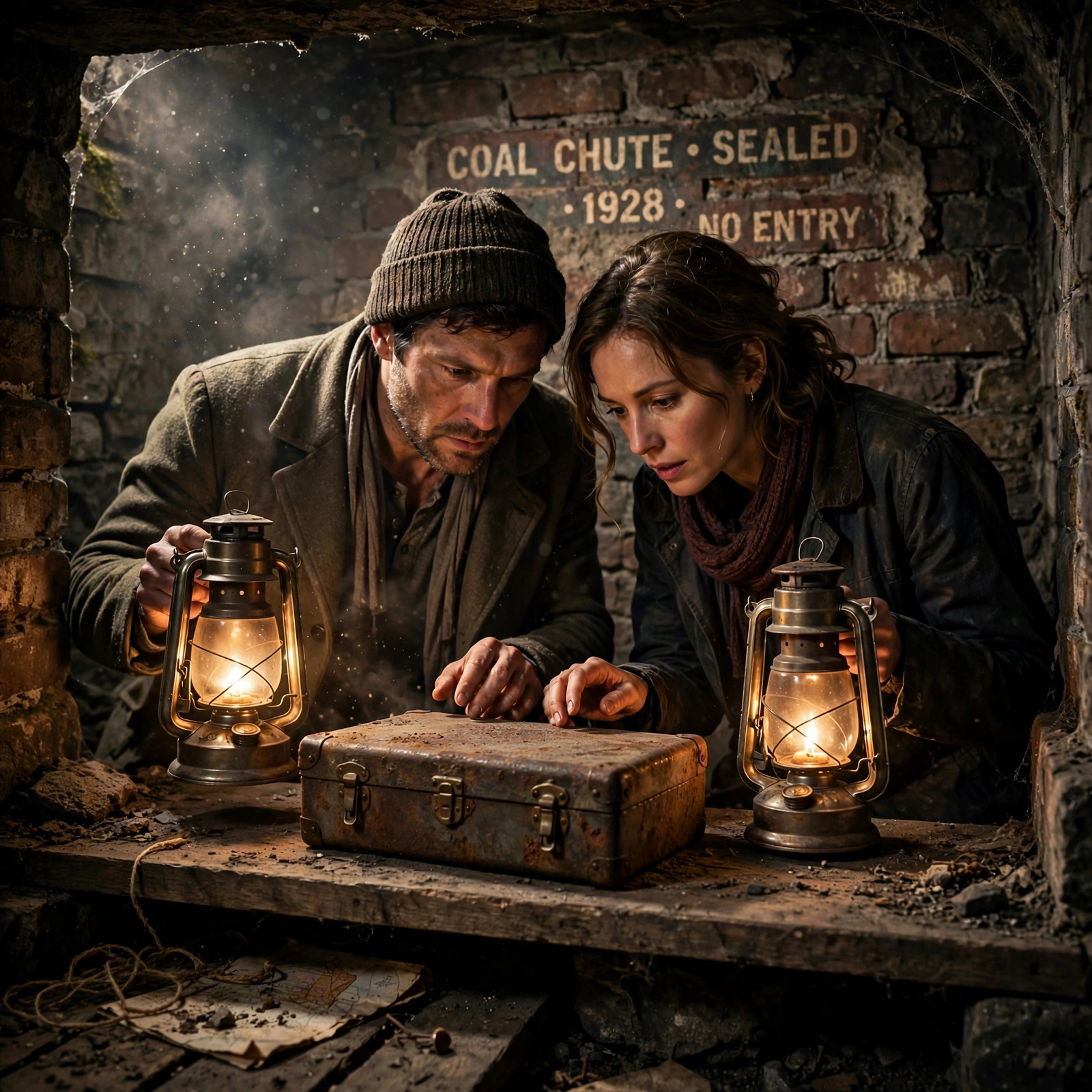
The brick came out easier than it should have, which Eli noted and did not like. Someone had mortared it recently enough that the joints were soft. Behind it: a low room, coal black, dry as a sermon, and on a shelf made of two planks and a nail, a metal document case with a padlock gone to rust.
Mara opened it with the small pry bar from her kit, hands careful, breath held. Inside were three things. A surveyor's field notebook, water stained but legible. A folded map of the north shore, hand annotated, showing a boundary that did not match the official plat. And an envelope, sealed, addressed to the County Clerk of Calloway County, with Ambrose Hollis's name signed across the flap.
"He hid his own testimony," Mara whispered. "He knew they'd come for the plats, so he sent the letters as bait and hid the proof where nobody would look for seventy years."
"And somebody in this town knows the proof exists," Eli said, "and has known for a while, and just found out we found it." He turned his lantern toward the doorway, and the light caught something on the floor that made his stomach drop: a cigarette butt, crushed under a boot heel, fresh enough that the paper hadn't curled.
"Eli."
"I see it." He was already moving, pulling her behind him with a hand at her back that was professional and absolutely not, backing them both out of the room and into the boiler room corridor, listening. The building made its old sounds. Pipes. Settling. And then, faint, from the direction of the main stacks: a door.
"Go out the loading dock," he said, low. "Now. Don't run, walk, running draws eyes. Get to the truck."
"You're not coming?"
"I'm going to see who came to visit." His jaw was set, and everything in her wanted to argue, and everything in her training, which was four years of surviving things, said argue with no one, save yourself, document later.
She got four steps toward the dock when the smoke alarm went off.
Later, she would piece it together: someone had poured accelerant at the base of the west stacks, the copies, the duplicates, the records nobody would mourn, a message more than a blaze. Eli caught the man at the fire door, a heavyset stranger in a gray hoodie, and the fight was short and ugly and ended with the stranger running into the woods behind the annex and Eli flat on the gravel with a split lip and a look on his face she had never seen, a look like a man doing arithmetic about his own failure.
The sprinklers saved the building. The smoke alarm saved them. Mara stood in the parking lot in her coat and her pajamas with the metal case locked in her truck and watched the volunteer fire department douse a fire the size of a dining table, and she understood that the arithmetic had changed. This was no longer history. This was a person, in her town, with a lighter and a grudge and a deadline.
Eli came to stand beside her, bleeding a little, and said nothing, and she leaned, just slightly, so that her shoulder touched his arm, and he let her, and that was the whole conversation, and it was the loudest one they'd had.
Seven: What Eli Didn't Say
The sheriff's deputy took statements in the annex kitchen at midnight, and afterward there was tea, because Mara made tea the way other people paced, and Eli sat at her little table with his lip split and his hands wrapped around a mug and told himself the thing he always told himself: don't. Don't notice that her kitchen light makes her look softer. Don't notice that she checks on him sideways, the way careful people check. Don't notice that he has not thought about Chicago, about the marriage, about the fire in the warehouse that took his partner's legs, in three whole days, because his head has been full of a woman who dries letters on window screens.
"You could have been killed tonight," she said. "You chased him. You don't even have a weapon."
"I have a flashlight."
"Eli."
"He was going toward the east stacks," Eli said, and his voice came out rougher than he planned. "The originals. The things you spent two years on. I didn't think. I just moved."
She looked at him across the table, and the look went on too long, and he knew, the way you know a fire is about to flash over, that if he stayed in this kitchen one more minute he was going to say something that could not be unsaid.
So he said it. Or almost.
"Mara. There's something you should know about me. About why I do this, why I watch buildings burn for a living, and it's not a good story, and if you hear it you'll either understand why I was on your loading dock at two in the morning or you'll never let me in this building again, and I've been trying to decide which I could survive."
Her breath caught. He heard it. The kitchen was very quiet, and her hand was flat on the table six inches from his, and he watched her fingers move toward his, one slow centimeter at a time, a permission slip written in skin.
His phone went off on the table between them like a smoke alarm.
Dispatch. A structure fire, the old Hollis farmhouse on the north shore, fully involved, and every private thought in the room died in the air. They looked at each other across the sudden professional distance, and Mara said, in a voice with a hairline crack down the middle of it, "The drowned line. That's his land. That's the north shore."
"Somebody's erasing the history," Eli said, standing, pocketing the phone, "before we can read it." And he was out the door before he could see what her face did when he left, which was probably just as well, because he had a fair idea, and it was going to keep him up for the rest of his life.
Eight: Mara, at the Fire Line
The Hollis farmhouse burned like it had been waiting a hundred years to burn, and Mara stood behind the tape with the whole town and watched, and thought about the phrase where the records sleep until it turned over and showed her its belly.
Records sleep in the dark, cold, and dry. But so do other things. So did, for instance, the county's first burial records, which were kept not in the annex but in the church vestry because the county couldn't afford a filing cabinet in 1911. So did the original road commission minutes. She had catalogued them her first month, offsite collections, items one through forty, and item thirty one was the Sparrow Lake Chapel vestry, and in it, she remembered suddenly, with the sureness of a key turning, a box marked HOLLIS SURVEY, DONATED 1952, UNOPENED.
Unopened. Because the county had no idea what it was. Because the county had never been asked.
She turned and found Eli ten feet away at the command truck, soot streaked, arguing into a radio, and she waited, vibrating, until he saw her face and crossed to the tape.
"The vestry," she said. "Eli. The Sparrow Lake Chapel keeps offsite county collections. There's an unopened Hollis box. If the farmhouse fire was about destroying the last physical proof, then the proof they're actually worried about might already be sitting in a church basement two miles from here, catalogued, safe, and completely unguarded."
He stared at her. Then he grabbed the sheriff's shoulder and said three sentences that rearranged the night, and a deputy was dispatched to the chapel with the keys, and Mara stood in the smoke haze shaking slightly with the size of what she'd just done, and Eli looked at her like she'd hung the moon over the burning ridge.
"Come with me," he said. "Not as a civilian. As the only person in this county who reads these records. If that box is what I think it is, I want you there when it opens."
"Is that procedure?"
"No," he said. "That's me."
Nine: The Box
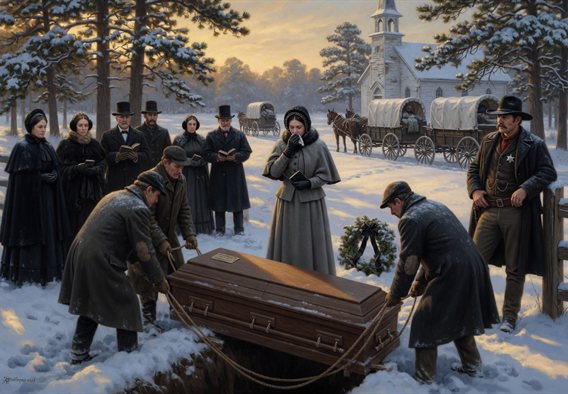
The vestry smelled of candle wax and hymnals. The box, when the deputy brought it out, was a plain archival carton, and Mara opened it with her kit knife the way she opened everything, slowly, reverently, and inside were Ambrose Hollis's original field books, his signed affidavit, and a photograph of a man and a woman on the north shore in 1913, and on the back, in pencil: For whoever is left to care. The truth keeps better than lies do.
The affidavit named names. A timber baron and a county commissioner, 1913, who had paid Hollis to move the north shore boundary two hundred feet, drowning a neighbor's claim and enriching their own, and Hollis had refused, documented, and notarized the whole scheme, and then, the affidavit's last line said, he expected to be paid in a different coin for his honesty. He was never seen again after September 1913.
"It's not about the land anymore," Eli said quietly. "The statute's dead, the men are dead, the land is what it is. It's about the paper. Someone descended from those men, or holding their interests, has spent a century comfortable in a lie, and the resort deal on the north shore would collapse if the title history got public. So they burn."
"And they'll burn the chapel next," Mara said, "or come for this box, or come for me, because I'm the person who keeps finding things." Her voice was steady. Her hands were not. "Eli, I want to say something before the sheriff gets here, and I don't know when I'll get another chance."
He turned to her fully, and the candle light moved on his face, and she saw him brace, the way men brace.
"You said you had something to tell me, in my kitchen, and the phone took it. I'm not asking for your story. I'm asking you to know that whatever it is, I've already watched you run into a building for my work and install a fire ladder for my window, and I have decided who you are, and your story can only make me more certain. So whatever you were afraid I'd think. I don't."
For a moment he looked at her like a man reading a map of a country he'd given up trying to reach. Then footsteps came down the vestry stairs, the sheriff and two deputies and a state investigator, and the moment folded itself away into the box with the affidavit, and they went to work, side by side, hands almost touching over a century old truth.
Ten: Eli's Story
They caught him eleven days later, and it was almost disappointingly small.
Dale Prue, fifty eight, title researcher, great grandson of the commissioner named in the affidavit, holder of a quiet option on three hundred north shore acres through a shell LLC. He had burned the Denver building too, four years ago, because Mara's predecessor in a Denver archive had requested county records connected to the same land syndicate's older frauds, and Prue had been cleaning up the family's paper trail for a decade, one careful fire at a time, and he had followed the request trail to Calloway County and found, to his bad luck, an archivist who lived in the building and a fire investigator who didn't sleep.
Eli sat in the truck outside the county jail after the arraignment and let the whole thing settle into his bones. Two hundred fires. This was the one where everything he knew had finally pointed the same direction, and it had pointed here, to a basement that smelled like wet paper, to a woman with steady hands and a housefire in her past.
She came out of the courthouse in the gray evening light and got in the passenger seat without being asked, and they sat in the quiet while the town's lights came on down the street.
"You promised me a story," she said, looking out the windshield. "Or you didn't promise. You started one. I'm told how you finish things matters."
He almost laughed. Then he didn't, because it was true, and it deserved to be handled honestly.
"Chicago," he said. "Eleven years ago. I was an investigator there. There was a warehouse fire, and my partner went in for a watchman's kid who wasn't inside, bad intel, and the floor went, and Ray's been in a chair since, and the intel was bad because I vetted the source too fast because I wanted to be the one who found the kid alive. It was nobody's fault and it was all my fault. That's the story. My wife left inside a year. I came up here to look at small fires and be useful and never again be the person whose certainty gets someone hurt." He turned his head and looked at her, and it cost him visibly, and she let him pay it without reaching for him, because she understood that some confessions need to be finished alone. "Until you. Until a plat map mattered more than my rule. I kept thinking, if I'm wrong about Prue, you're the one in the building. And I couldn't live in that math. So I worked the case like it was my partner in it. That's what you did to me."
Mara was quiet for a long moment. Then she said, "You were on my loading dock at two in the morning because you couldn't live in the math."
"Yes."
"Eli. I moved into a building that keeps catching fire because I couldn't live without the records. We're not careful people. We're just people who found the one thing we can't lose."
He reached across the console then, slowly, the way she had reached across the kitchen table, one centimeter at a time, giving her every inch of room to refuse, and she turned her hand palm up to meet his, and their fingers closed, and eleven days of almost and eleven years of never arrived in the truck cab all at once.
"I'm going to kiss you now," he said, "unless you'd rather I drove you home first and we did this slowly, over months, like people with sense."
"I have never once in my life wanted people with sense," Mara said, and he leaned across, and the kiss was soft and then it wasn't, and it tasted like tea and split lips and every unfinished conversation they'd ever had, finished. When they broke apart, her hand was fisted in his jacket and his forehead was against hers and neither of them moved for a while, because some fires you let burn.
Eleven: Where the Records Sleep
Spring came to Sparrow Lake the way it always did, mud first, then trillium, then the town's annual argument about the boat launch.
The annex east wall was rebuilt. The restored Hollis affidavit went on display in the courthouse lobby in a case Mara had designed, with the photograph of Ambrose and his wife on the north shore, and beneath it a small card: The truth keeps better than lies do. The north shore title history was published, the resort deal died quietly in a lawyers' conference room, and three families got back a strip of shoreline their great grandparents had lost, which nobody had thought would ever matter again and which mattered enormously.
Dale Prue pled to three counts of arson and one of conspiracy and would be away long enough to learn a trade. The Denver case was reopened and closed properly, which was not justice exactly, but was the shape justice leaves in a wall, and Mara stood in her rebuilt archive the day it reopened and touched the new plaster and let herself feel it.
Eli was there, of course. He was always there now, in the way of a man who had learned what he couldn't lose and had rearranged his life around the knowledge. He'd taken the county's permanent investigator post. He'd installed, over her laughing objection and then her quiet gratitude, a second fire ladder at her window, redundancy, he said, and she'd kissed him on the ladder, which had been against several regulations and worth it.
"Council meeting tonight," he said, leaning in the doorway of her office, holding two coffees. "They're voting on the archive expansion. You're presenting."
"I know. I have twelve minutes and forty slides and a nervous stomach."
"You'll be fine. You're the only person in this county who reads these records."
"That's not why you're proud of me."
"No," he agreed, and crossed the room, and kissed her hair, and stood with her while she gathered her notes, and the light came through the new east window onto the shelves where the county's memory slept, dry and dark and safe, guarded now by a woman who had lost everything once and a man who had lost himself once, both of them found, both of them staying.
"After the vote," Mara said, sliding her notes into her bag, "there's a thermos with our names on it and a loading dock and no emergency whatsoever. I checked. Twice."
"First time for everything," Eli Vance said, and took her hand in front of the whole council, because after a year of watching, the town had earned the show, and they walked out together into the bright cold morning, where nothing was burning, and nothing was going to.
The truth keeps better than lies do.
End of story.

Serena Blake
Serena writes romantic suspense and dark romance for readers who want pulse and payoff. Her stories chase trust as hard as they chase danger.
Leave a comment
Comments