



What the Tide Brought Back
Can two strangers on opposite sides of an insurance claim learn to trust each other faster than a killer can silence them both?
One: The Claim
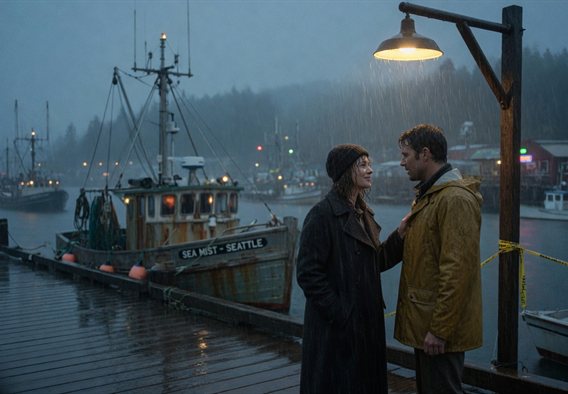
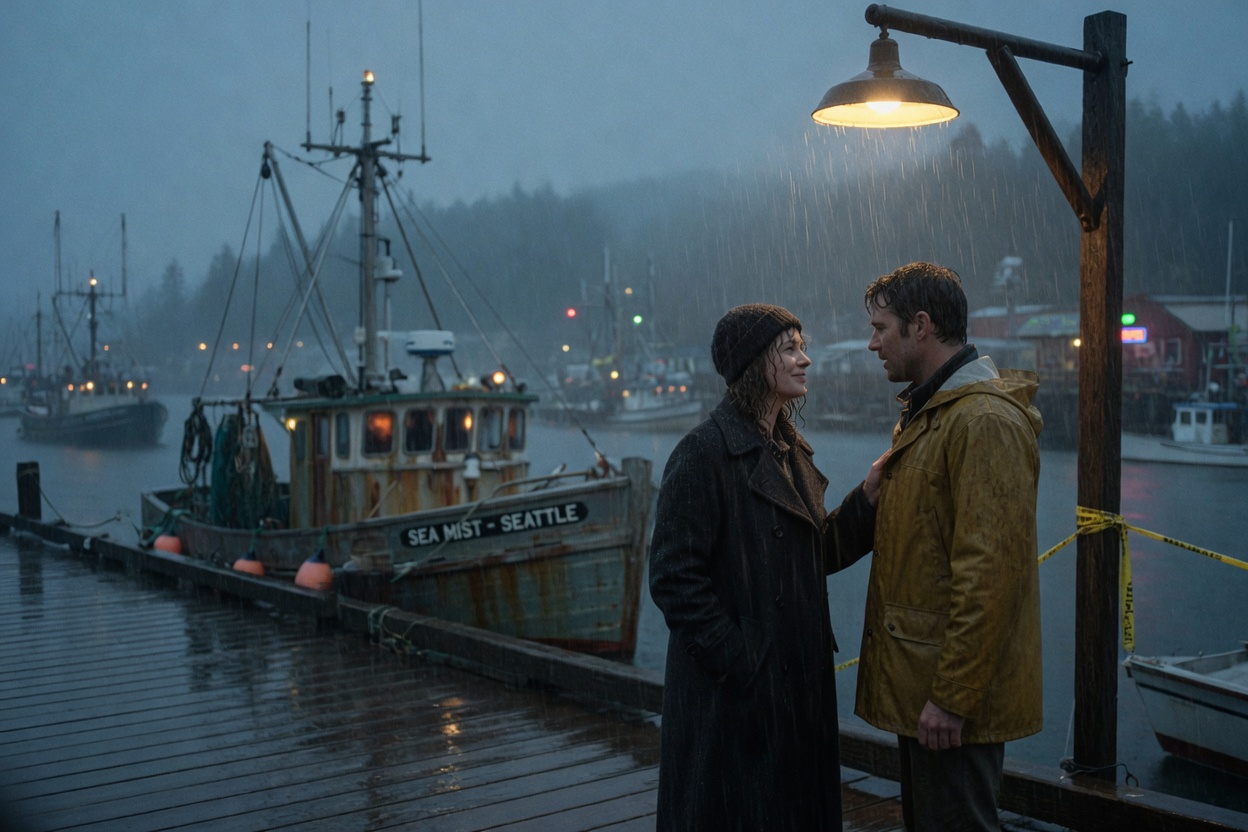
The rain hit Kestrel Cove sideways, the way Nadia Reyes had been told it always did in November, and she stood at the top of the harbor ramp with a folder in her hand and a bad feeling in her chest. Below her, the marina spread out in gray rows, masts swaying, halyards clanking against aluminum like a room full of restless people. Slip fourteen sat empty. That was where the Pelican Rose had been moored, right up until the night she went down with half a million dollars of cargo and a captain nobody in this town seemed willing to talk about.
Nadia had been an insurance investigator for nine years. She knew every flavor of sinking: the drunk ones, the lazy ones, the ones where the owner had been reading the bail letters. The Pelican Rose file read wrong. The paperwork was too clean. The witnesses too polite. The captain, a man named Dario Voss, had been pulled from the water by a passing crabber and had not said a single useful word since, mostly because he was in the hospital with a fractured skull and a story that changed every time a nurse wrote it down.
And then there was the mechanic.
According to the claim notes, the last person to service the vessel was E. Hartman, Hartman Marine, the steel building at the end of the working dock with salt-crusted windows and a sign so faded it looked like a rumor. The notes added, in the local adjuster's careful handwriting: Difficulty recommended. Locals protect their own.
Good, Nadia thought. Locals had never once protected their own from her.
She walked down the ramp. The dock shifted under her boots, alive with the swell, and the smell hit her the way it always did, diesel and brine and rope, a smell she had loved once, in another life, on her father's shrimp boat in the Gulf before the bank took it. She had learned young that boats could lie. Their owners lied better. She had built a whole career on listening past both.
The bay door of Hartman Marine was open six feet. Inside, heat lamps glowed over a half-restored wooden sloop, and a man crouched beneath her hull, sanding, shirt sleeves rolled, forearms dusted white. He was tall in a folded kind of way, dark hair pushed back with a rag, and when he heard her boots he stopped sanding and did not look up for a long three seconds, as if deciding whether to pretend the shop was empty.
He looked up.
"If you're here about the mooring," he said, "the harbor office is two buildings up. If you're selling something, the harbor office is also two buildings up."
"Nadia Reyes. Meridian Mutual Insurance." She held out the folder like a badge. "I'm the investigator on the Pelican Rose claim."
Something moved behind his eyes, quick and cold, a shutter going down on a window. He set the sanding block down with exaggerated care, like a man putting away a gun rather than a tool, and stood. Up close he was mid-thirties maybe, with a faded scar through one eyebrow and hands that were ruined in the specific beautiful way that only boat carpenters' hands are ruined.
"Eli Hartman," he said. "I know who you are. The office called ahead. Save your breath. I did the bottom paint, the seacocks, and the fuel system on that boat last spring. Everything I touched was sound when I touched it. Everything I signed says so. Go harass Dario."
"Dario has a skull fracture and a shifting story."
"Dario has been drinking since before I had this scar."
"Then he was drinking on somebody's payroll," Nadia said. "Somebody whose payroll I'd like to find. You worked on the boat. That makes you either a source or a suspect, and I'd rather you be a source."
He laughed, short and humorless, and wiped his hands on the rag. "That's the polite version. Last time your company had business in this harbor, my father's yard went under. Meridian denied a fire claim on a technicality and Everett Hartman died four years later still sanding hulls he couldn't afford to finish. So forgive me if 'source or suspect' doesn't feel like a menu with a good option."
Nadia knew the file. Reyes v. Hartman, except it had been Hartman v. Meridian, 2016, denied on a documentation error her own office had made and buried. She had found it in the archive on the flight north and read it twice. She had not mentioned it to anyone.
"I read the file," she said quietly.
He went still. "Excuse me?"
"Hartman v. Meridian. The denial hinged on a surveyor's stamp from a guy who, it turns out, wasn't certified. The company knew and used it anyway. It's in a footnote in the appeals record." She met his eyes. "I'm not going to pretend that fixes anything. It doesn't bring your father back and it doesn't buy back the yard. But I'm telling you I know, so you know I'm not here wearing a halo. I'm here because something about this sinking stinks, and I'm good at smells."
For a moment the shutter almost came up again. Almost.
"Coffee," he said finally, like it cost him. "There's a pot in the office. It's terrible. You can drink it while you tell me exactly why you think it stinks."
It was not friendship. It was barely truce. But when she followed him into the cluttered office, past a wall of photographs of boats his father had built and one of a boy grinning on a dinghy who had to be Eli, she felt something she hadn't felt on a case in years: the electricity of a puzzle, and of a person, at the same time, and the certainty that the two were about to become a problem for her.
Two: The Ledger
The coffee was, as promised, terrible. Nadia drank it anyway and laid the claim file across his desk, right on top of an order form for teak plywood, because Eli Hartman struck her as a man who would not respect a folder she was careful with.
"The Pelican Rose went down two miles off the north point at 2:14 in the morning, according to the Coast Guard ping," she said. "She was carrying a mixed commercial cargo, mostly electronics components, insured by us. Dario says he heard a muffled bang below, felt her list, tried to run her for the shallows and lost her. The wreck sits in ninety feet of water. Salvage survey says the hull has a hole in it consistent with a through-hull fitting failing or being made to fail. Here's the problem." She slid over a photo. "A through-hull that fails rips. One that's pulled out leaves a clean collar of unmoved caulk. This one left a clean collar. Pulling a seacock is quiet, controlled, and takes ten minutes with a wrench."
"Ten minutes in a rolling sea," Eli said, studying the photo, "is not quiet."
"Not from inside. From outside, in a dry suit, on a calm night."
He set the photo down. "You're saying a diver scuttled her."
"I'm saying I don't know yet. But here's the other problem." She spread three fuel invoices. "Dario filed fuel receipts totaling eleven hundred gallons for the outbound run. The tanks hold nine hundred. The harbor master's log shows the Pelican Rose taking on six hundred the afternoon before she sailed. The extra five hundred gallons exists on paper only. Somebody paid for phantom fuel, which is the single most boring and most reliable way to inflate a claim."
"Unless the fuel was real," Eli said slowly, "and went somewhere else."
Nadia looked at him. That was the thought she'd been circling for two days, the one she hadn't said out loud, and this sand-dusted stranger with a grudge against her company had said it in eight words. "Go on."
He turned the invoices toward himself, squared the edges, a fidget she'd learn to read later as the way he thought. "Kestrel Cove is the last cheap fuel stop for three hundred miles of coast. There's a fuel float at the north end, self-serve, camera's been broken since I don't know when. The Pelican Rose sailed at six. If she loaded five hundred gallons nobody logged, she didn't burn it in two hours of running." He shrugged, but his jaw was tight. "She could have met somebody at sea. Transferred it. Cash sale, no paperwork, and then the boat goes down and the paper trail says the fuel burned."
"Fuel smuggling," Nadia said. "Off a sinking insured boat."
"Or on." His voice had gone quiet. "Nadia, if somebody was using Dario's boat to move fuel, or anything else, in and out of this harbor, then that boat didn't sink for the insurance. The insurance was just the tidy part. The untidy part is that Dario Voss was on it when it happened, and he didn't scuttle her himself."
The heater ticked. Outside, a gull screamed once and gave up, like even the gulls had decided it wasn't worth the effort in this weather.
"Who benefits?" Nadia asked.
"In Kestrel Cove?" Eli smiled without warmth. "Half the harbor has debts. But there's one man who's bought three boats at distress auction in two years, who always seems to know which captains are drowning before the banks do. Roland Prewitt. Owns the chandlery, the fuel float lease, and half the fishermen's noses through credit."
"Convenient villain."
"Convenient isn't wrong." He leaned back. "Look. I'll tell you what I told the local adjuster. My work on that boat was sound. I'll show you the receipts, the paint codes, the seacock torque log, everything. But if you're going to go asking questions about Prewitt in this town, don't do it alone, and don't do it wearing your company jacket. People here have long memories and short fuses, and right now the story going around the dock is that the insurance company is trying to pin the sinking on Dario to dodge the payout."
"Is that what you thought when I walked in?"
"I thought worse than that," he said. "But you walked in and told me the company burned my father, so I decided you were at least honest about being the enemy." He almost smiled. It transformed his whole face and he seemed to realize it and shut it down. "The receipts are in the back. And Reyes? The camera on that fuel float isn't broken. Prewitt told people it was. You should find out what it's been recording."
Three: The Camera
She got to the fuel float at low tide the next morning, in the gray hour when the harbor belonged to gulls and liars. The camera housing sat above the pump station, and the "broken" camera inside was a three-hundred-dollar unit with a scratched lens cover and a full SD card. Eli had been right. It had been recording the whole time.
What it recorded, over six weeks, was a pattern: the Pelican Rose coming to the float at night, twice a week, on dates the harbor log said she was elsewhere. A skiff running dark from the north point, low in the water. Two figures transferring drums under a tarp. And on the final night, eleven days ago, a third figure on the float that made Nadia's mouth go dry: broad, in a yellow rain hat, unmistakably Roland Prewitt, watching the transfer and checking his watch.
She was copying the file to her laptop on the dock, hunched against the drizzle, when boots rang on the planks behind her and a hand came down on the laptop lid like a slammed door.
"That's harbor property," Prewitt said. He was bigger than his photos, ruddy, smiling, wearing the smile like a hat he'd practiced in. "Structural issues. The whole float's unsafe. You shouldn't be out here, Ms..."
"Reyes. Nadia Reyes." She did not move her hands. "And the float held me fine. Nice camera."
His smile didn't waver, which was worse than if it had. "Busted thing's been there for years. Harbor district keeps promising to fix it." His hand stayed on the laptop. "Insurance work, is it? Funny. Nobody official said anything about an investigator being in town. Usually the adjusters give us a courtesy call. Small town."
"I'm not big on courtesy calls." She lifted the lid, closed the laptop, picked it up. "Thanks for the hospitality, Mr. Prewitt. I'll let you know if I have questions."
"You do that," he said. "And hey. If I were you, I'd be careful around Hartman. His family's had it in for this harbor since his father lost the yard. Tragic. Some men don't forgive, and it makes them do strange things to boats."
The sentence was a gift wrapped in a threat. He was seeding the story, planting her first suspect, and he had done it within ninety seconds of learning her name. She walked up the ramp at an unhurried pace while every nerve in her body suggested running, and she did not let her shoulders climb until she reached the truck.
Then she drove to Hartman Marine with the windows down and the rain coming in, and told Eli all of it. The footage. The transfer nights. Prewitt on the float. The speech about Eli's father.
Eli listened standing very still, arms crossed, in front of the half-restored sloop like a man standing guard. When she finished he was silent so long she checked whether he'd heard her.
"He said my name," Eli said at last. "To you. In the first five minutes."
"Yes."
"Then he's already building the file. He did the same thing when my father's yard burned. Spread it around that Everett Hartman was behind on his insurance premiums and maybe wanted out. Sixteen years my family's lived inside that story." He uncrossed his arms slowly. "Nadia. If he's watching you, he's watching me by reflex, and he watches everything through the chandlery window. You can't come here in daylight anymore. You can't park the truck where the marina cam sees the plate. From today you're taking sailing lessons."
"I beg your pardon?"
"I teach a winter restoration class. Two students, Thursday nights, the Calder sisters, they're sixty and seventy and they mostly come for the coffee and to complain about their husbands. Add a third student. You learn to glass a hull, the town sees a tourist with a hobby, and nobody thinks twice about your truck behind my shop." He said it flatly, practically, but his ears had gone red at the rims. "Unless you've got a better way to keep meeting."
"You're offering me a cover story," Nadia said, "invented by a man who hates investigators, so we can work together on a case that could get us both hurt, without Prewitt noticing."
"When you say it like that it sounds insane."
"It sounds insane," she agreed, "and it's the best plan anyone's offered me all week." She put out her hand. "I need a copy of that footage stored somewhere that isn't my laptop or my hotel."
He shook her hand. His grip was warm and rough and lasted exactly one beat longer than business required, and they both pretended otherwise with a commitment that would have impressed a professional actor.
"Thursdays, six o'clock," he said. "Bring your own gloves. And Reyes? If Prewitt had a man on that float the night the Rose went down, then the sinking wasn't Dario's idea. Somebody tried to take the boat out from under him with him on it."
"Which means our scuttling diver left a witness alive by accident."
"Which means," Eli said, "they'll be looking to fix that accident. Keep your hotel door locked and your story straight. You're a tourist. You love boats. You think I'm a terrible teacher and a worse cook."
"Is that last part cover?"
"We'll find out," he said, and turned back to his sanding, and Nadia walked out into the rain smiling at nothing, which, she reminded herself firmly, was exactly the kind of thing investigators in trouble were not supposed to do.
Four: Thursdays
The first Thursday, Nadia learned to lay fiberglass and learned that Eli Hartman taught the way he probably did everything, precisely, patiently, with his whole attention, and that his whole attention on her was a physical event she could feel along her spine. The Calder sisters clocked it within forty minutes, because sixty and seventy year old women who have been married miss nothing.
"He never stands that close to correct anybody," Ruth Calder observed, not remotely under her breath, while Nadia sanded a seam.
"He's demonstrating the grain direction," Nadia said.
"Mm," said Dot Calder, the elder, and refilled everyone's terrible coffee.
By the third Thursday, Nadia had a system. Tuesdays she did her visible, boring insurance work: interviews with the harbormaster, a kind and terrified man named Okafor; a publicly announced appointment to examine the wreck survey; lunch at the dockside diner where she was carefully seen. Thursdays she disappeared into Hartman Marine, where the real file lived in a locked drawer under a false bottom Eli had built, of course, and where the evenings had started acquiring a texture that had nothing to do with fuel invoices.
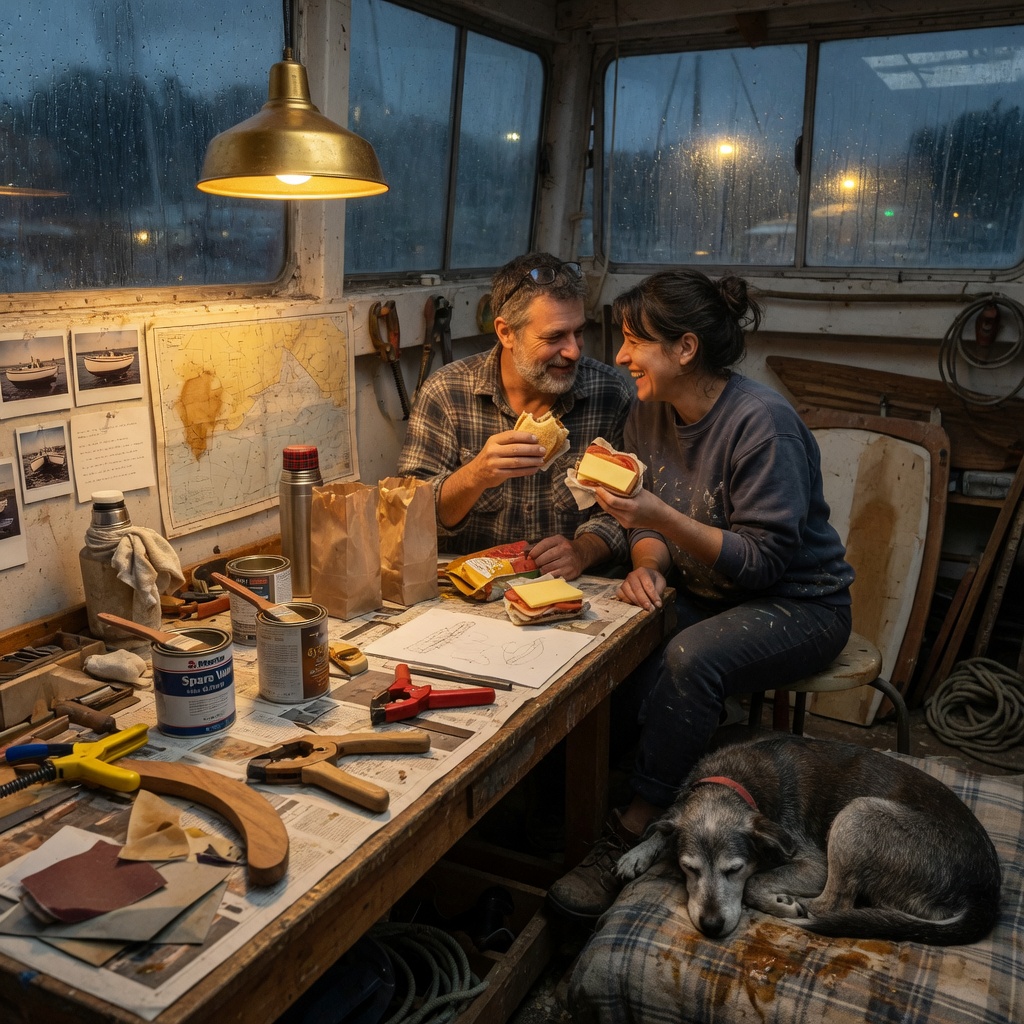
He cooked, badly, exactly once a night, and they ate at the workbench among clamps and cans of varnish. He had a dog, a gray-muzzled mutt named Whistle who appeared at precisely seven and stationed himself at Nadia's feet as if assigned. Eli talked about his father in slivers, a sentence at a time, the way you hand someone pieces of something fragile. She talked about the Gulf, and her father's shrimp boat, and the day the bank men came, and when she finished he didn't offer sympathy. He said, "So that's why you do it," and she realized he was the first person who'd ever understood that her career was a wound wearing a badge.
"I wanted to be the person who catches it," she said. "The lie. Every claim I close clean is one bank truck that doesn't come."
"And the ones you close dirty?"
"Keep me up at night."
"The Hartman file," he said, staring at his mug. "Kept me up for nine years. My mother moved inland. I stayed. I don't know which of us handled it worse."
"You stayed because of the yard."
"I stayed because leaving would have been agreeing with them," he said simply, and Nadia understood she was in real trouble now, the deepwater kind, over her head and rising.
The fifth Thursday, she kissed him. Or he kissed her. Later they would disagree about this, seriously, amicably, for years, and it would be one of their favorite arguments. What the record shows is that they were standing over the transom of the sloop, her hand flat on fresh varnish, his hand over hers to show her the stroke, and the shop was quiet, and Whistle was snoring, and when she turned her head his face was four inches away and neither of them acted like it was a surprise.
It was a careful kiss, then a less careful one. When they broke apart, breathing, her palm still tacky with varnish against his shirt, Nadia started laughing and couldn't stop.
"Problem?" he asked.
"I don't kiss sources."
"I don't kiss insurance companies."
"So this is bad judgment on both our parts."
"Consensual bad judgment," he said. "The only kind." He cupped her face, thumb along her jaw, suddenly serious. "Tell me to stop anytime and I stop. Tell me now, even."
"Keep varnishing, Hartman," she said, and pulled him back down, and whatever else that winter became, it started there, honest and slow and chosen.
Five: The Wreck
The Pelican Rose lay on the bottom in ninety feet of gray-green nothing, and in early December Nadia did something no adjuster expected and Prewitt definitely did not: she hired a local dive outfit, quietly, through Dot Calder's nephew, and went down on the wreck herself.
She had two hundred logged dives and a cold-water certification she'd earned in Puget Sound on a previous case. The local boys said ninety feet in December was a stupid dive. Eli said nothing at all for an entire evening, and then at six the next morning was at the dock with thermoses of coffee and, she noticed, a dry suit of his own.
"You're not diving," she said.
"Somebody has to hold the line and check your gauges, and somebody has to look at that seacock with an actual mechanic's eye, and it's sure not going to be Dot's nephew." He was already pulling on the suit. "Argument's over. We're burning daylight."
The descent was cold enough to hurt. The wreck lay heeled over in the silt, her name unreadable under weed, and Nadia's light found the hole the survey had described, midship, starboard. She hovered while Eli worked in, reading the damage the way she read ledgers.
His gestures were economical. The seacock: pulled, tools, from outside. Then he stopped, and even through the mask and the dark water she saw him go rigid, and he beckoned her in close to the hull beside the hole, and pointed his light into the shadow of a cable run.
A device. Commercial, waterproof, wired to a small charge, and clearly never fired, its antenna lead sheared in the sinking. Not a bomb in the dramatic sense. A scuttling aid. A backup, for if the seacock didn't do the job, and its remains would tell any competent lab who'd bought it, because there was a stamped serial on the housing, and Nadia, miracle of miracles, could read it through her mask and had committed it to memory before Eli's gloved hand closed over her wrist and pointed up.
On the surface, coughing in the boat, she said it out loud: "There was a failsafe. Somebody rigged that boat to die twice."
"And Dario was aboard," Eli said. He was pulling off his hood, hair wild, alive, and she had a sudden, dizzying awareness that she loved watching him be competent, and pushed the thought down where it couldn't distract her. "Nadia. If the seacock was the plan and the charge was the backup, whoever built the backup is a pro. Prewitt is a bottom feeder. He's a leech. He's not this."
"So Prewitt's a customer."
"Or a front. Or being squeezed himself." He toweled his hair, staring north toward the point. "There's a fuel barge run out of Astoria. Brokering. My cousin used to crew it before he got out. People up and down this coast have sold to it, captains who couldn't make payments. If somebody organized the selling, the buying, the sinking, the claim, that's not a harbormaster's problem. That's a serious problem."
"Then we give the serial number to the state police," Nadia said slowly, "and I give my company everything, and we get out from under it."
"Will your company protect Dario?"
"No."
"Will they protect you, if this goes big?"
She thought about Prewitt's hand on her laptop. About the adjuster who'd written difficulty recommended in the file. "Meridian protects Meridian," she admitted.
"Then we get one more piece first," Eli said. "The device is gone, but the receipts aren't. Prewitt's chandlery sells everything. Marine grade epoxy, sealant, and I'd bet my shop the exact wire and connectors on that rig. Whoever built it had to source it locally, and Prewitt keeps handwritten counter sales for cash customers. Nine years of them, in a box in that office, because the man is too cheap for software."
"You want to burgle a chandlery."
"I want to buy a look at a ledger," he said, "and I know a seventy-year-old woman who does his bookkeeping two mornings a week and owes me for a hull repair she never paid for, and whose husband Prewitt bankrupted in 2011. Dot Calder has been waiting for this for a long time."
Nadia looked at him, dripping, triumphant, reckless, hers, and felt the fear arrive right on schedule, one beat behind the tenderness, the way fear always traveled with her.
"Thursday," she said. "We do it Thursday. And Eli, whatever we find, the second it points past Prewitt, we hand it all to the state police. Both of us. Together. No lone hero stuff."
"Deal," he said, and then, ruining her composure entirely, he smiled the real smile, the one from the day she walked in, and added, "Partner."
Six: What Dot Found
Dot came through, and then some. Tuesday morning, Eli's shop phone rang, and Dot's voice was tight as a halyard: "Hartman. That book you wanted. There's a second ledger, one he doesn't know I've seen because he keeps it in the safe and I keep his lunch. initials in the margin, cash sales, wire and connectors and a waterproof housing, sold to a customer initialing T.K., three weeks before the Rose went down. And boy, you listen to me. He wrote something in the margin next to that sale. Three words. Handled. Quiet. Done."
"Dot, don't touch anything else. Don't copy anything. Nadia's coming to your bridge game tomorrow, normal as anything."
"I know how to play bridge, Hartman, I've been playing since before you were born. But you tell that girl the game's at my house this week, not the clubhouse, and she should come early." She hung up.
They met at Dot's kitchen table Wednesday, three days ahead of schedule, and that was the mistake. Nadia saw it later, with terrible clarity, how everything that followed came from moving one day early, because that night, while they paged through Dot's photographs of the second ledger at Eli's shop, the headlights came down the working dock slow and stopped, and a figure got out of a truck and stood in the rain looking at the lit bay door of Hartman Marine, and then got back in and drove away.
"T.K.," Nadia said, when the taillights were gone. "Eli. Who is T.K. in this harbor?"
"Tom Kessler," Eli said, and his voice had gone flat. "Runs the charter boat out of slip twenty-two. Forty years old, quiet, always short of money. And Nadia, he's a certified diver. Teaches rescue diving in the summers."
The shop was very warm and very quiet. Whistle raised his head.
"State police," Nadia said. "Tomorrow morning. First thing. Serial number, ledger, footage, everything. We're done being clever."
"Agreed," Eli said, and it was the last simple thing for a long time.
Seven: The Dark Night
It came apart on a Thursday, because of course it did.
Nadia drove to Hartman Marine at five with the file copies in a waterproof bag, ready for the morning handoff, and found the bay door ajar and Eli's truck there and a stranger's wet boot prints on the floor, and her heart dropped like a stone through ninety feet of cold water before she heard voices, low, from the office.
She came around the sloop with her hand on the wrench she'd started carrying, and stopped.
Two people in the office. Eli, and a woman she'd never seen, mid-forties, rain-soaked, holding a paper bag and talking fast, and Eli holding a document out to her with the expression of a man doing surgery on himself.
"...she can't know yet, Terri, do you understand, if Meridian hears it they'll bury it like they buried Dad's file. I need one week."
"Eli, the woman's a professional. She's risking her neck for your case and you're going to run it solo behind her back? That's not your father's stubbornness, that's just stupid."
The woman saw Nadia first. Her face did the terrible thing of a person caught. Eli turned.
Nadia stood in the doorway of the office holding the bag that held everything, and asked, very evenly, because even was all she had left: "Run what solo?"
"Nadia." He set the document down. "This is my sister, Terri."
"You don't have a sister in the file," Nadia said. "Or a cousin in Astoria. You said your mother moved inland alone."
"Terri's not in the file because I paid to keep her out of it," he said. "After the yard burned, she was married to a man doing barge work up north. Brokerage work. Terri, sit down."
"I'll stand," Terri said, white-faced.
"Her husband runs dispatch for the barge operation," Eli said. "The one I told you about. Terri came to me a week ago because after the Rose sank, Kenny started drinking and talking, and last Saturday he told her the north point run was ending because the Rose 'was the last load and now it's clean.' And he keeps a work phone. And Terri photographed the screen." He looked at Nadia and his voice was low and even and wrong. "The manifest numbers on that phone match a shipping agent's name that's been in the claim file since day one. The agent who booked the Rose's cargo. The one who signed the phantom fuel order using the harbor master's stamp. My cousin died six years ago, Nadia, so when I said cousin I meant Kenny, and every word I told you about the barge was true except who was close enough to see inside it."
Nadia heard it all. She heard the case assembling itself into something enormous. She heard none of it mattered even slightly compared to the fact that he'd had it for a week and told her nothing.
"Why not me?" she asked. "Why not Tuesday, Wednesday, any single one of the hundred hours we've spent building this?"
"Because look at the name on the agent's file," Eli said. "The shipping agent's bond is underwritten through Meridian's marine division. Your company is three links up this chain, Nadia. Not investigating it. Underwriting it. The same company that burned my father. I watched you walk into that possibility every day and flinch, and I thought, if I put it in front of her, she'll hesitate. One day. One call to her office. And hesitation gets us both killed."
"You decided for me."
"Yes." He didn't dress it up. "Yes. I did. Because I've been burned by exactly this, and I chose wrong on purpose, and I'd do it again, and I'm sorry."
The heater ticked. Whistle pushed his head against Nadia's knee and she didn't pet him, because her hands were busy holding herself together.
"You know what the worst part is," she said quietly. "It's not the secret. It's that you think I'm her. That I'm the company. Nine years, Eli, I've been careful, and clean, and the one time I let somebody all the way in, he'd already pre-sorted me into the pile with the people who took his father's yard." She set the waterproof bag on the desk next to his document. "Everything's in there. Serial number, footage, ledger photos, Dot's statement, my notes. Tomorrow at nine I'm walking it into the state police office in Newport, and I'm going to tell them about Meridian's bond too, with or without your sister's phone. You can come with me or you can stay here and be right."
"Nadia."
"Don't," she said. "You don't get to fix this tonight. That's the whole point."
She walked out into the rain and did not look back, and it took everything she had, and Whistle followed her to the truck and then, called by nothing she could hear, turned back to the shop, to him, because dogs don't take sides, they just choose their person, and she sat in the driver's seat and let the wipers count for her, one, two, three, until she could drive.
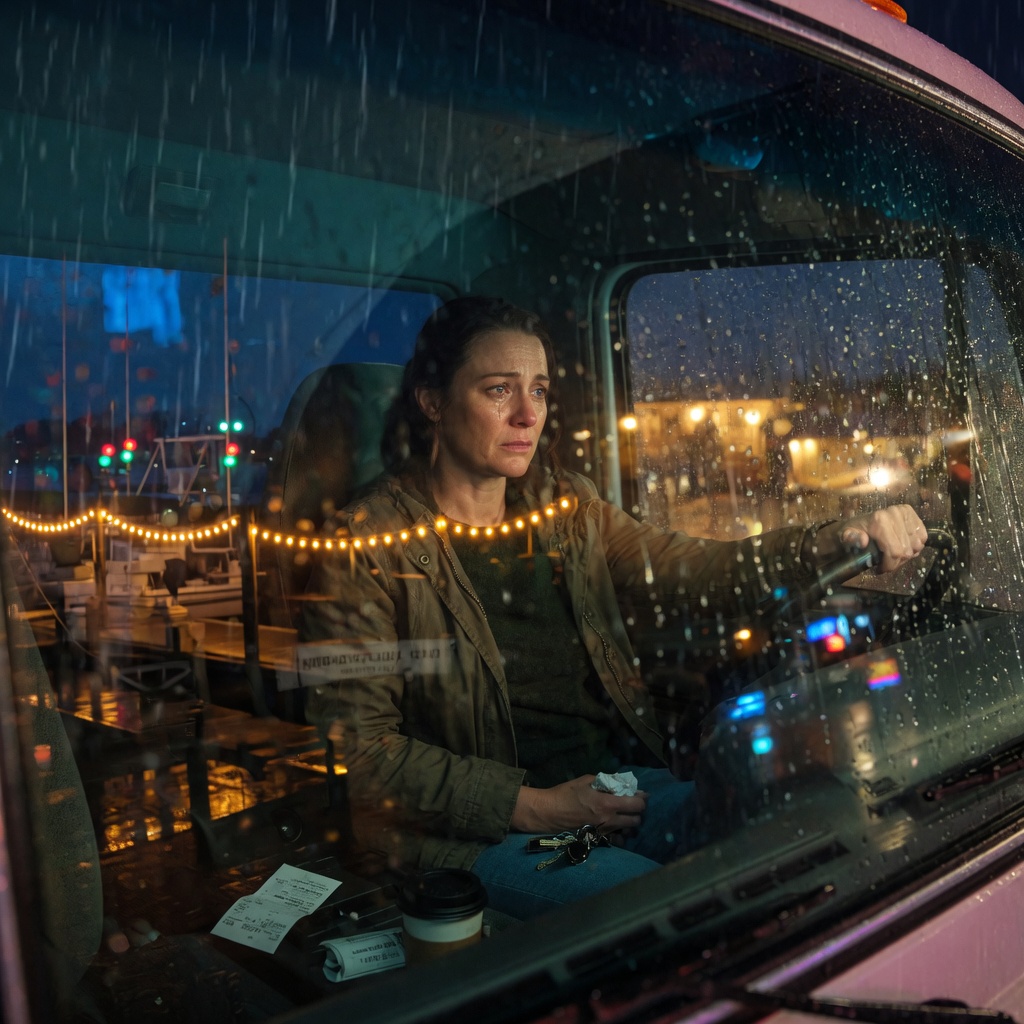
Eight: The Quiet Gesture
She didn't sleep. She sat in her hotel room with the file copies spread on the bed and rebuilt the whole case end to end, because that was how she survived things, and around four in the morning she made two discoveries that steadied her hands.
One: the shipping agent's bond, trace three links up through Meridian, was a nested subsidiary, and the underwriting file showed it had been flagged twice by an internal auditor three years ago, flagged and closed with a signature she recognized. The local adjuster. The one who'd written difficulty recommended. Whoever was running the smuggling had bought themselves a lookaway inside her own company, which meant when she walked into the state police office at nine, she was walking in knowing the nest was close to her chair.
Two: at 7:58 a.m., a text from a number she hadn't saved but knew like her own pulse.
I'm not asking you to forgive me. I'm asking you to be careful. Terri's phone has the manifest. It's in the bag I left with the Newport trooper desk under your name, receipt number 4471, dropped off at 7:10 this morning, no note, no credit. I read your file on me, Reyes. All of it. Your father's appeal. You filed it pro bono in 2019, through the fishermen's legal aid, under a firm name I didn't recognize until last night. You've been fighting for a man like my dad since before you ever met me. I chose wrong because I was a coward, not because you were suspect. Come to the dock at noon. If you don't come, I'll be at the trooper's at nine anyway, on your side of the table, whatever that costs me.
Nadia read it four times. Then she checked the firm name in her own memory, the shell she'd used so Meridian's flaggers would never connect a Gulf shrimp captain's daughter to an internal challenge, and laughed until she cried, alone in a hotel room at dawn.
She drove to Newport at eight-forty-five.
The handoff took four hours and it was the hardest professional work of her life, because at 10:20 a door opened and Eli Hartman walked in with his sister, sat down unasked on her side of the table, and when the trooper asked who he was, he said, "Co-investigator," and looked at Nadia, and waited, and she could have kept him on the other side of the line for the rest of his life and he'd have deserved it.
"Co-investigator," she said. "And my partner. Let's start with the seacock."
By Friday the state had Tom Kessler's dive shop, Tom Kessler's confession-with-lawyer, and a chain that ran through Roland Prewitt's ledgers up to the barge brokerage and into the shipping agent and, in a widening ring that made the local paper's editors weep with joy, to the Meridian marine division and its adjuster, whose difficulty recommended margin note became, briefly, the most famous handwriting in Oregon. The FBI took the brokerage. The state took Prewitt, who wept at his arraignment about debts, and nobody in Kestrel Cove came to hold his hand. Meridian, facing a scandal, settled Dario Voss's medical and lost wages without being sued, and terminated the adjuster with a severance agreement that Nadia refused to sign as a witness on principle, which got her a call from an internal affairs officer in Portland who offered her, of all things, a job she actually wanted: marine fraud, regional, her own cases, her own rules.
She said she'd think about it. She was learning to sit with decisions for a day before making them. It was going reasonably well.
Dario Voss, out of the hospital, walked with a cane now and bought Nadia dinner at the dockside diner and told her, gruffly, that Hartman boys were pigheaded but that Everett's had been the only honest welder on the coast, and that he'd known Eli since the boy was fixing outboards barefoot, and that if a man builds you a boat, Reyes, you keep him. Nadia said she'd consider it. Dario said that too was pigheadedness. The town agreed.
Eli waited eleven days. She knew because Whistle told her, in the way of dogs, appearing at her truck window on the twelfth morning at the diner, tail going, with a familiar silhouette at the shop door behind him, not approaching, just there, present, holding the space open the way he'd held the line for her at ninety feet.
She walked up the dock.
"I'm not here to argue about the file," he said, before she could speak. "I'm not even here to ask for anything. Terri and I closed escrow Tuesday on Dad's old yard. We're rebuilding it. First contract, if I get one, is restoring a wooden sloop for two old ladies who are unbearable about their deadlines. Second contract, they tell me, is a shrimp boat down from the Gulf that a bank took off a family in 2004, and Terri found it in an auction record, and we bought it for scrap price, and I've been fixing her up for two months in secret and I'm out of things to secretly fix, Nadia. She's got your father's name relettered on the transom. I couldn't give you your dad back. I could give you the boat."
Nadia looked at him. He looked back. The harbor clanked and swung around them, indifferent, gorgeous, going about its business.
"You chose wrong on purpose," she said.
"Yes."
"And then you chose right at cost to yourself, publicly, with a trooper watching."
"Yes."
"And you rebuilt my father's boat."
"Sanded every inch of her myself," he said. "She's sound. Everything I touched, I signed."
"That's the only vow I need from you," Nadia said, "ever. That everything you touch, you sign." She closed the distance and took his ruined, beautiful hands. "I forgive you. Not because of the boat. Because when it mattered, you did the right thing with witnesses. That's the only version of you I'm interested in, and it's the one I fell for, anyway."
"Reyes," he said, unsteady.
"Hartman," she said. "Shut up and show me the boat."
He laughed, the real one, wide open, and this time he let it stay.
Epilogue: The Working Dock, June
The wedding was small and the town lied about not caring and then filled the entire working dock anyway. Dario gave Nadia away with his cane and his Dignity, the Calder sisters ran the food like a naval operation, Terri cried before the vows started, Whistle wore a collar with actual flowers on it and bore it like a martyr, and the ceremony happened on the deck of the restored Rosa Elena, riding easy at her mooring, her new paint white as a gull.
They'd argued about the vows. Nadia had wanted to write hers. Eli had wanted to say his out loud, unrehearsed, and had terrified himself about it for a month, and then stood there in the June light and said: "I, Eli, take you, Nadia, and everything I touch from today, I sign. If it goes wrong, it goes wrong with my name on it, next to yours."
She got him back for the sisters' toast, in which Ruth announced to sixty people that she had called the romance in week one, and Dot produced, from her purse, the terrible office coffeemaker and presented it to the couple as a family heirloom, and the dock laughed until the gulls relocated.
Her father flew up in September and took the Rosa Elena out with Eli for a full day while Nadia started her new Portland-adjacent job on a Monday, and came back sunburned and quiet, and shook Eli's hand at the fuel float where the camera, now legal, documented everything, and said only, "She runs true," and Nadia, watching from the ramp, understood it was the eulogy her father had never given and the blessing he never would, delivered in the only language he had.
In October, the state announced charges against two more names up the brokerage chain. In November, the first winter storm blew through and Nadia stood in the yard's new office window watching her husband walk a hull in the rain, and her phone buzzed with a new claim: a fishing vessel, missing, circumstances unclear, and the folder, when she opened it, smelled like the beginning of the next story.
She left it for the morning. She had a lesson to teach on Thursdays now, and a boat waiting at the dock, and a man at the workbench who looked up when she came in, every single time, like she was the tide coming back in, like he'd been counting on it.
Outside, the fog rolled over Kestrel Cove and kept whatever secrets were left. There weren't many. The town was working on that.

Serena Blake
Serena writes romantic suspense and dark romance for readers who want pulse and payoff. Her stories chase trust as hard as they chase danger.
Leave a comment
Comments