

The Long Program Home
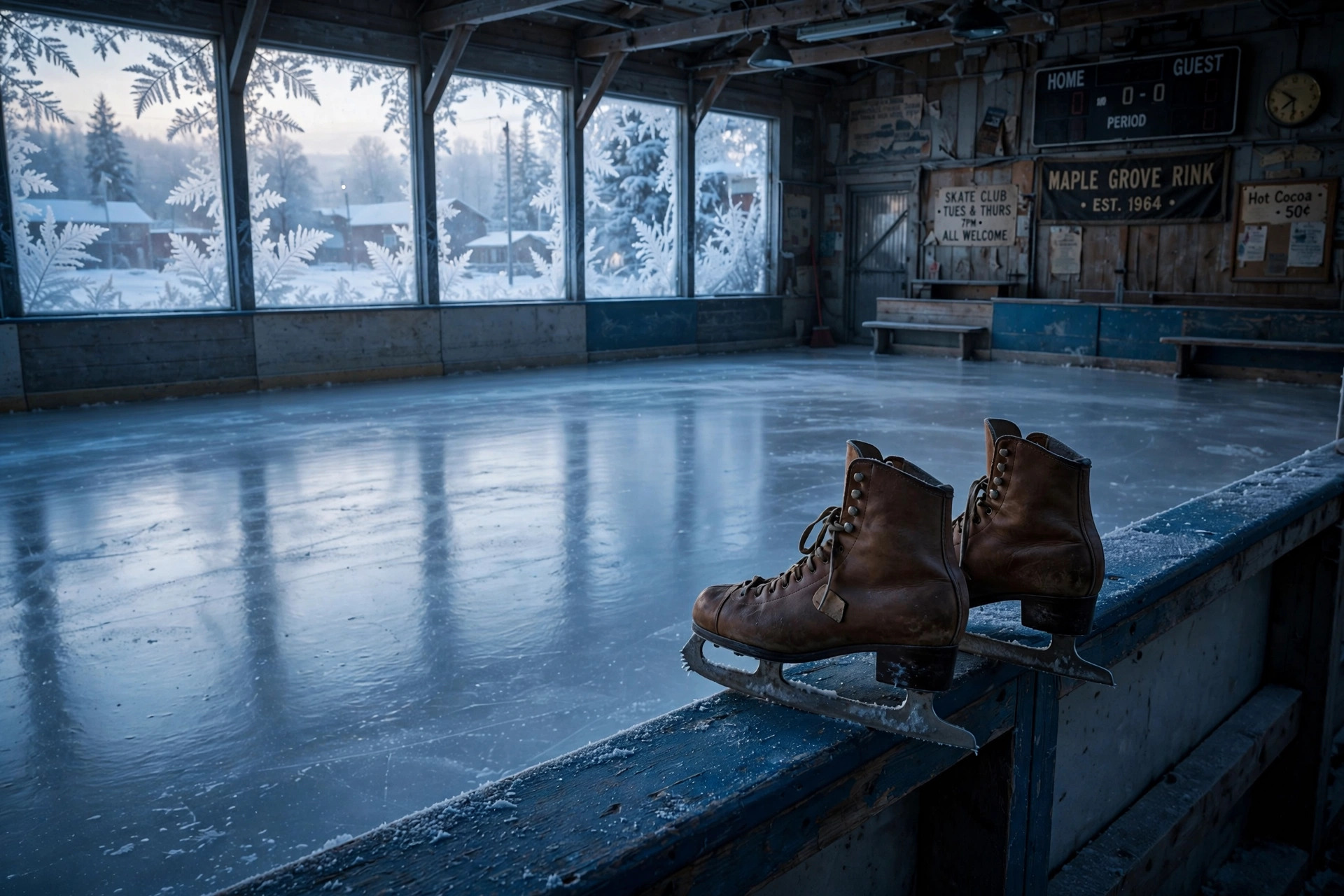
The question Nadia Voss had spent six years refusing to answer was waiting for her in the parking lot of the Cedar Hollow Ice Center, written in frost on her windshield and in the shape of a man she could see through the glass doors, moving across the ice like he had never left it. Could you come home to the place that broke you and still find something whole?
She had flown eleven hundred miles to bury her coach, not to answer that question. But grief has poor manners, and it had dragged her back anyway.
The Funeral Weather
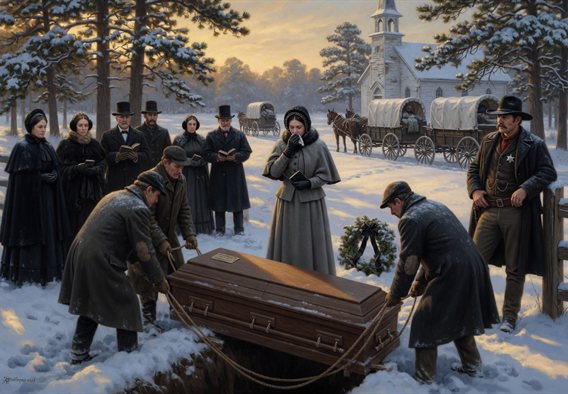
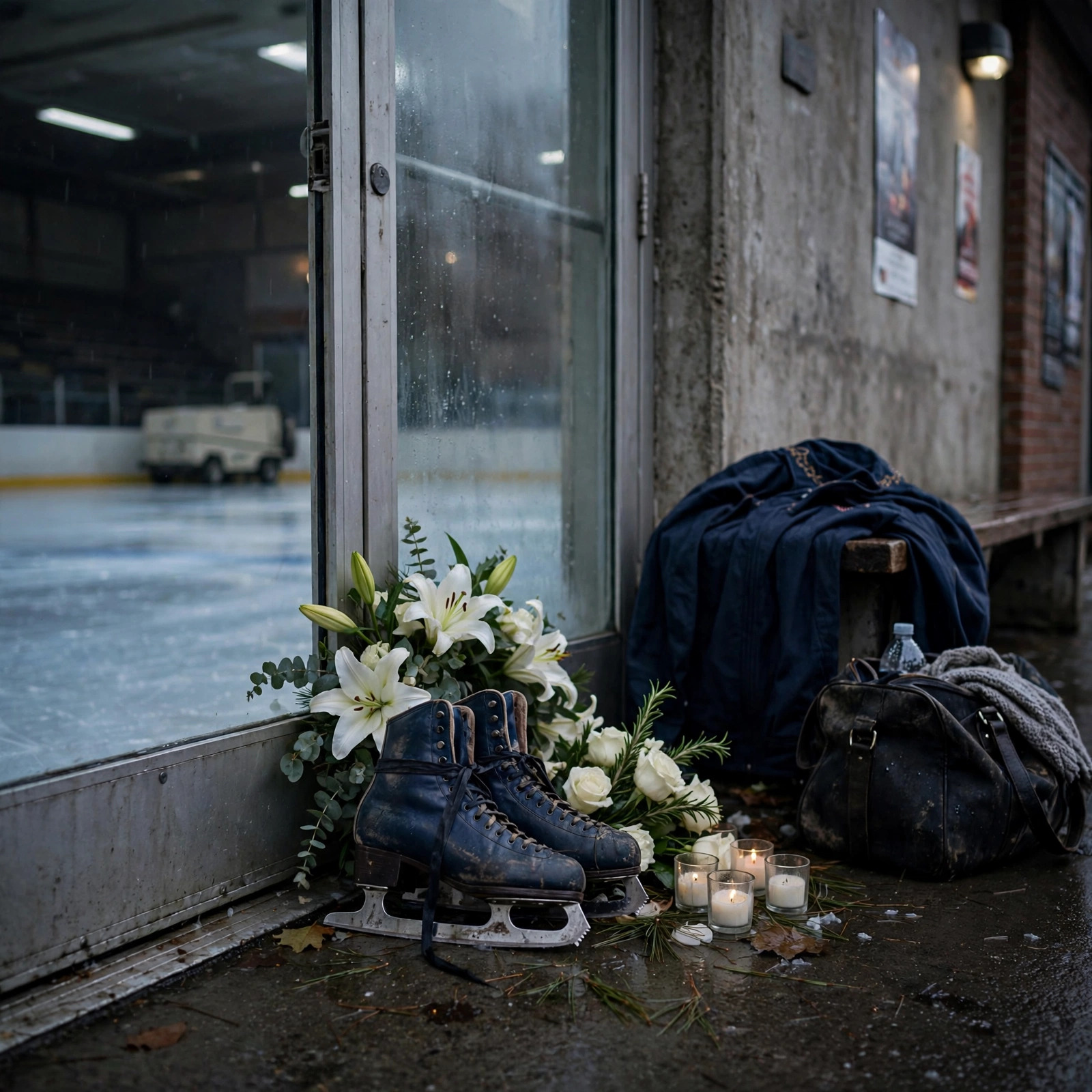
It was snowing in Cedar Hollow, Vermont, the way it always snowed in early February, fat unhurried flakes that made the whole town look like a snow globe someone had shaken too hard. Nadia stood at the edge of the graveside crowd in a black wool coat that had been fashionable in Boston and was merely warm here, listening to a pastor who had clearly never seen Anatoly Belov on the ice, because he described him as a quiet man.
Anatoly had been many things. Quiet was not one of them. He had coached pairs skating for forty years, bellowing across rinks in three countries, and he had built Nadia and her former partner into the team that everyone said would medal at the world championships before an ankle gave out and everything else followed it down.
She kept her eyes on the casket. If she looked up, even for a second, she would see him. She could feel him the way you feel a draft from a bad window, a cold current that found the gap in your armor. Dmitri Sokolov. Six years, and her body still catalogued his presence before her brain could object.
The pastor said something about perseverance. Nadia counted the snowflakes on her sleeve. When the service ended and people began drifting toward their cars, she made the mistake of looking up.
He was standing twenty feet away in a dark coat, taller than she remembered, or maybe she had shrunk the memory to survive it. His hair was shorter now, his jaw rougher, and there was a new stillness in him that had not existed at twenty-four. Back then Dmitri had been all kinetic energy, laughing through lifts, flirting with gravity. This version of him held himself like a man who had learned what things cost.
Nadia turned toward her rental car. She made it eleven steps.
"Nadia."
Her name in his voice. The accent had softened but the weight of her name had not. She stopped, because she was thirty-one years old and a professional, and running to a car in the snow would be undignified even if it was all she wanted to do.
"Dmitri." She turned. Up close he had lines around his eyes that had not been there before, and he was holding his left hand oddly, fingers curled loose, as though something in the wrist did not fully trust itself. "I didn't know you'd be here."
"I coach here now," he said. "I took over Tolya's rink in October."
Something went cold behind her ribs. "You what?"
"His heart was failing all last year. He asked me to come home. He asked me," Dmitri repeated, gently, as if he knew exactly what he was handing her, "to take the juniors and the senior pairs and keep the place alive."
The place. The Cedar Hollow Ice Center, where Anatoly had run summer camps that smelled of pine and chlorine, where Nadia had spent every birthday from nine to twenty-four, where Dmitri had caught her for the first time in a practice lift when she was nineteen and he was twenty and they had both held on a half second longer than the element required.
"I'm sorry about Tolya," Dmitri said. "I know you two stayed close."
"We did." Her voice came out flat and she hated it. "I talked to him every Sunday. He never mentioned you."
"He promised you he wouldn't." Dmitri's mouth did something that was almost a smile and mostly an apology. "He was a loyal old man. It made him a terrible go-between."
Snow gathered on his shoulders. He did not brush it off. She noticed that about him even while her whole nervous system screamed to leave, that he stood in weather without fussing at it, that he had learned patience somewhere in the years she had not been watching.
"I'm here for three days," she said. "The funeral. The estate things. Then I fly back to Boston Sunday night."
"You're commentating now, right? I've seen you on the broadcasts. You're good at it. You're honest."
"Honest," she echoed. "That's a funny word between us."
Something flickered across his face, there and gone, a door closing on a room she could not see into. "Fair," he said. "Three days. If you want to see the rink, it's still standing. Mostly." He nodded at the building behind her, and she realized with a small shock that she had been standing in its parking lot since dawn, that some part of her had driven there before the funeral because grief wanted the familiar.
"I don't think that's a good idea," she said.
"No," he agreed. "I don't imagine it is." He stepped back, snow spinning off his coat. "It was good to see you, Nadia. You look strong."
She watched him walk into the building, through the glass doors, out onto the ice where a group of junior skaters were waiting, and she told herself the ache in her chest was only the cold.
What the Estate Left Behind
Friday was paperwork. Anatoly had no children and no spouse, and it turned out he had named Nadia, of all people, executor of a will that fit on four pages. The lawyer, a patient woman named Mrs. Grady, walked her through it in an office that smelled of toner and old carpet.
"The rink goes to a trust," Mrs. Grady explained. "Mr. Belov structured it so that the current operator, Mr. Sokolov, can run it for five years, with an option to buy at a reduced price if the trust's conditions are met. The conditions are competitive. He needs a senior pairs team at nationals within two seasons. It was very specific."
Nadia stared at her. "A team. From where? Cedar Hollow has four hundred residents and a feed store."
"He's been recruiting, apparently. There's a girl from Burlington and a boy from Plattsburgh. Seventeen and eighteen, so they'll be seniors next season."
"Juniors," Nadia said. "He's going to throw children at nationals."
"Mr. Belov believed in throwing things," Mrs. Grady said dryly, and slid a second envelope across the desk. "There's also this. He left a letter for you. He left one for Mr. Sokolov as well. I delivered his yesterday."
Nadia took the envelope to her hotel room and did not open it for four hours. She sat on the end of the bed with her coat still on, watching snow come down over the town square, and finally tore it open because Anatoly would have been furious at the delay.
The letter was short. His handwriting had gone shaky near the end and she could hear his voice in every crooked letter.
Nadya. If you are reading this, I am dead, which means you finally have to listen to me, since you never did when I was alive. I know what happened between you and Dima. I know it was my fault as much as anyone's, because I pushed you both past the line and called it dedication. I am sorry. I should have said it while I could shout it. The rink needs him and he needs the rink, and you, Nadya, need neither and deserve both. Come home before you decide what home means. With love and no apologies for the twizzles, Tolya.
Nadia read it three times and then set it on the nightstand and lay down on top of the comforter in her coat and did not sleep at all.
Six Years of Silence
Here is what everyone in skating knew, in the broad strokes: Nadia Voss and Dmitri Sokolov were the future of American pairs until the 2019 world championships, when on the second throw triple loop in the free skate, Nadia came down wrong and her ankle shattered in three places. Dmitri caught her, mostly. She still hit the ice. She never competed again. They had been together two years by then, secretly, the way pairs skaters always are, and three weeks after the surgery he ended it in a hospital corridor, said he could not be the reason she was afraid, and moved to Europe to skate with a new partner within the year.
Here is what nobody knew, in the fine strokes: that the injury was not the beginning of the end but the middle. That for months before worlds, Nadia had been landing that throw on a stress reaction the team doctor had waved off as shin splints, because Anatoly's calendar did not have a slot for healing. That she had hidden the pain from Dmitri, and he had found out afterward, from her physical therapist, and had carried it like a stone ever since. That the night he broke up with her, she had thrown a water bottle at his head and missed on purpose, and he had known she missed on purpose, and somehow that had been worse.
That she had never once, in six years, told him she forgave him, because she had not been sure it was true.
Saturday morning she woke at five out of habit, the old training clock in her body still ticking, and found herself driving to the rink before she had consciously decided to. The building was the same and not the same. New roof. Same smell: cold air, rubber mats, the ghost of pine cleaner Anatoly had imported from his mother's village and insisted on using long after the supplier stopped answering.
Through the observation window, the ice was lit and empty except for one skater running a program at seven in the morning, alone, no music, just breath and blades.
Nadia pushed open the door before she could talk herself out of it.
The sound of her boots on the rubber flooring made him turn. He stopped mid-crossover, glided out, and came to the boards with his program breath still roughening his voice.
"You came."
"The letter," she said, and held up the envelope. "Tolya left me homework."
Dmitri laughed, one short breath, and it did something dangerous to her chest. "He left us all homework. He left the juniors homework. He left the Zamboni driver homework." He wiped his face with his sleeve. "What does yours say?"
"Come home before I decide what home means." She recited it flat, but her hands were not steady, and he saw.
"Mine says the same," he said quietly. "Different words. He told me I had spent six years training my body and none of it training my heart, and that a coach who cannot stay in the room when things break has no business coaching."
The rink was silent around them. Somewhere a compressor hummed. Nadia looked at the ice, at the long clean sheet of it, and the memory rose the way it always rose, uninvited: the roar of an arena, the flash of cameras, the moment her world tilted and her ankle folded and the only sound she remembered afterward was Dmitri screaming her name.
"I can't be here," she said. "I'm sorry. I shouldn't have come in."
"Nadia, wait." He did not come around the boards, and she understood that he was holding himself back on purpose, giving her the distance she had asked for six years ago with a water bottle and silence. "One thing. Then you go, and I won't bother you again, I swear it on Tolya's terrible pine cleaner."
She waited. The compressor hummed.
"I know what you found out," he said. "About the doctor's report. Tolya's lawyer gave me his files in October. The stress reaction, the scans he sat on, the timeline. I read them forty times." His voice cracked on the last word and he steadied it. "I ended things in that hallway because I thought I had broken you. Because you hid the pain to protect the schedule, and the schedule was mine as much as his, and I could not stand next to you and be the reason. It was cowardice dressed up as mercy. I have had six years to know that and I am only now saying it out loud. I am sorry. Not the polite sorry. The one that costs."
Nadia stood very still. Part of her had rehearsed this conversation for years, in the shower, on red-eye flights, in the pause before falling asleep. In the rehearsals she had been magnificent. In the rehearsals she had said things that leveled him.
What she actually said was, "I hid it because I was afraid if I stopped, I'd find out I wasn't brave enough to start again."
His eyes closed for a moment. When he opened them, they were bright. "We were twenty-four and terrified," he said, "and we let a dead man's ambition drive us off a cliff."
"He's not dead yet in that sentence," Nadia said, and the terrible joke escaped before she could stop it, and Dmitri laughed, wet and surprised, and the sound broke something open in her that she had welded shut in a hospital corridor six years ago.
"Three days," she reminded him, but her voice was not flat anymore, and they both heard it.
The Juniors at the Boards
She should have left. Instead she stayed for the seven thirty session, because a van pulled up and eleven junior skaters tumbled out of it like puppies, and one of them, a tall girl with a red scrunchie, spotted Nadia through the glass and made a sound like a teakettle.
"That's Nadia VOSS," the girl announced to the entire rink. "She did the quad throw at junior worlds before anyone. I have her poster. I have TWO of her poster."
"One poster, Marta," said a boy who was clearly her partner, lacing his skates with the resigned air of someone who had heard this speech daily. "The other one is the same poster."
"It's the SAME poster, Felix, it's DOUBLE the Nadia."
Nadia, against every plan she had made in the parking lot, found herself signing a poster, then a skate guard, then the back of Felix's glove, and Dmitri watched from the boards with an expression he was trying very hard to make neutral and failing.
"They're good," she admitted later, watching Marta and Felix run their side-by-side triple toes. Marta was fearless and slightly ahead of the music always; Felix was precise and slightly behind it always, and their free skate was a beautiful argument.
"They're raw," Dmitri said. "Marta doesn't trust the lift yet. Felix overthinks everything. They fight like siblings." He glanced at her. "Tolya's conditions for the trust. Senior team at nationals within two seasons. If I miss it, the trust can sell the rink to a developer."
Nadia went cold. "A developer."
"A man named Harlan Pierce has been circling for years. Tolya turned him down eleven times. Pierce wants to put condominiums on the land." Dmitri's jaw tightened. "The juniors, the learn-to-skate program, the whole town's winter, gone. So. Two seasons. One team."
"You could recruit," she said. "There are teams that would come for a coaching legend."
"I put out feelers. Nobody wants to move to Cedar Hollow in February." He shrugged, and she saw the truth he was not saying: he had come home to a dying man's last request, and he was going to keep it or break himself trying.
The old instinct rose in her, the one that used to build training plans in the margins of notebooks, the one that had atrophied into commentary instead of action. She looked at Marta laughing on Felix's shoulder, at the frost flowers on the far glass, at the man she had loved at twenty-two and mourned at twenty-five and could not stop watching at thirty-one.
"I fly out tomorrow," she said. "But."
He waited. He had always been good at waiting on the ice. It was the off-ice where he had failed her, and where she had failed him, and they both knew it now.
"But," she repeated, and made a decision that scared her more than any quad ever had, "I have a broadcasting bye the last week of February. And I know pairs choreography and I know what a national team needs to look like in eighteen months. If you want a consultant, for the juniors, remote, and I mean remote, Dmitri, I will video call and I will be ruthless."
Something moved through his face like weather. "I want that," he said. "I want it too much, probably. I'll take it anyway."
"Ruthless," she warned.
"I remember," he said, and his smile was the old one, the one from before the fall, and she left the rink with her heart behaving like an unsecured element.
Video Calls and Muscle Memory
The remote consulting lasted three weeks before it collapsed under the weight of its own pretense.
The calls started professionally. Nadia watched film of Marta and Felix every night after her broadcast segments, marked up programs with a stylus, sent Dmitri documents with timestamps and language like "her free leg is lazy on the death spiral exit, fix it or bench it." He responded with video clips and, increasingly, with sentences that had nothing to do with skating. A photo of the town diner's pancakes. A question about whether she still drank her coffee with the ridiculous amount of cinnamon. An admission that he had rewatched their 2018 free skate and cried at the final lift, which had never happened at the time because they had both been too tired to feel anything.
Then Marta fell badly on a lift entrance in week three, a wrist injury, minor, but she cried on the ice and Felix froze beside her, and Dmitri called Nadia in a panic because he had never handled a scared teenager alone and Tolya had always known what to say.
"Put me on speaker," Nadia said, and talked Marta through the fear the way Tolya had once talked her through it: not with bravado but with honesty. Fear means you respect the element, she told the girl. Respect it, then do it anyway, slowly, a hundred times, until the fear gets bored.
After the call, Dmitri was quiet for a moment on the line. "I forgot you were like this," he said. "Not the commentator. This. The one who knows how to put people back together."
"You're the one who kept the rink alive."
"I'm the one who hides in the office when the compressor makes a noise I don't recognize," he said. "Nadia. The trust deadline. It's worse than I told you. Pierce made an offer to the trust directly, a big one, and the trustee is a bank, and banks listen to big numbers. If I don't have a senior team at nationals this coming season, not next season, this one, I might lose it regardless."
Nadia sat down slowly at her kitchen table in Boston, in her tidy apartment with its professional lighting for her broadcast segments, and heard herself say the thing she had been circling for three weeks.
"Then you need a team that's already senior eligible."
"There are three retired pairs skaters I could call," he said. "All of them retired for reasons. Bad backs. Burnout. One went into finance and seems happy, God help him." A pause, long enough to cross a country. "And one of them is on this call."
"Dmitri."
"I'm not asking," he said quickly. "I want you to hear me say I'm not asking. You retired because skating took your ankle and almost took everything else. I will never ask you to come back. But if you ever wanted, in any universe, to skate again, even once, even for a show, I would stand on that ice with you and I would catch you every single time, and this time you would know everything I know, all my weight shifts, all my fears, nothing hidden. Full disclosure. Consent on every element. We'd build it from zero and you could stop any day for any reason and I'd say thank you for the day."
Nadia looked at her hands. They were not shaking, which surprised her. Somewhere in six years of commentary booths and careful, well-lit safety, she had assumed the desire was dead. It was not dead. It had been waiting, patient as frost, for exactly this voice saying exactly these words.
"I'd need everything tested," she said finally. "Imaging, strength benchmarks, a sports medicine team I choose. My ankle is strong now but I don't do anything on faith anymore."
"Good," he said. "Neither do I. Not anymore."
"And if I say stop at any point, in a lift, in a conversation, in any of it."
"We stop," he said. "Immediately. No negotiation, no sulking. I learned that the hard way, Nadia. I'm not asking you to trust me with your body on the ice until I've earned it with my behavior off it. Weeks of it. However long it takes."
She closed her eyes. "Ask me properly, then."
There was a sound on the line that might have been him sitting down, or kneeling, or simply holding on. "Nadia Voss," he said. "Will you skate with me? One season. Cedar Hollow. Nationals or bust. You set every condition and I'll meet every one."
"Yes," she said, and the word came out steadier than she felt, the way her best elements always had.
Testing Week
She arrived in Cedar Hollow in early March with a folder of medical clearances two inches thick and a set of rules taped inside her skate bag. Dmitri had prepared the way he prepared everything now, which was to say obsessively and with spreadsheets. The rink had new mats, new harness rigging for the overhead, and a physical therapist named Dr. Okafor who had come down from Burlington three days a week and treated Nadia's ankle like a museum piece being prepped for one final exhibition.
The first week they did not touch. They skated side by side, relearning each other's edges from a distance of ten feet, and it was somehow the most intimate thing Nadia had done in years. He cued her with the old calls, short and musical, and her body answered before her mind could audit the response. Her edges were still there. Under the desk jobs and the broadcast lights, her edges had been waiting too.
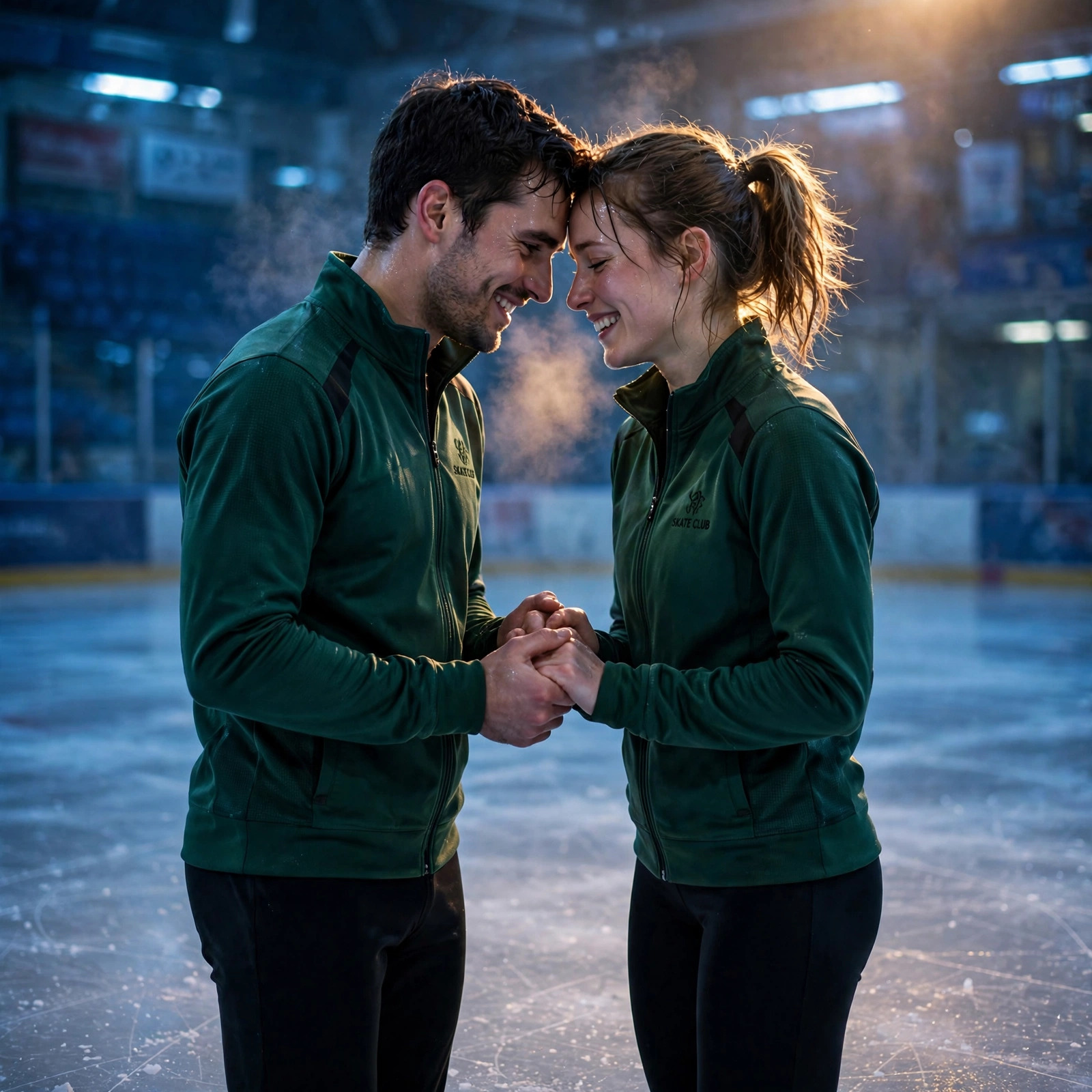
Week two, they did hand-to-hand holds in the harness. The first time his hand closed around hers above the boards, both of them laughed at the same moment, shaky and surprised.
"This is ridiculous," she said. "We've done ten thousand of these."
"And it feels like the first one," he said. "Is that okay? Tell me if it's not okay."
"It's terrifying," she said. "Keep going."
Week three, Dr. Okafor cleared her for rotational elements at reduced rotation, and they ran the first lift entrance at half speed forty times, and on the forty-first Dmitri stopped, skated to the boards, and pressed his forehead against the padding.
"What's wrong?" she called.
"Nothing," he said. "Everything. I keep counting your landing spots like a rosary. I keep seeing 2019." He turned around. His honesty was a new feature and it undid her every time. "I need to say it out loud so it stops living in my hands. I was the one who threw you. I have to forgive myself on the ice, out loud, or my throws will be careful, and careful throws are dangerous throws."
So they did a strange thing, the two of them, that a generation of skaters would have found absurd and that Nadia would remember for the rest of her life: they stood at center ice and said the accident out loud, together, sentence by sentence, like witnesses giving matching testimony. What happened. What each of them hid. What each of them believed afterward that was not true. When they finished, Dmitri skated to her, asked with his eyes before his arms, and she nodded, and he lifted her, full extension, first time in six years, and the rink was so quiet she could hear both their hearts.
"Still there," he said, meaning her, meaning them, meaning the element itself.
"Still here," she corrected, and he smiled, and brought her down soft as snowfall.
Championship Week
They competed three times before nationals. A small invitational in Lake Placid where they finished second to a team half their age and skated off the ice laughing like delinquents. A sectional event where they won and Nadia threw up in a bathroom from nerves afterward and Dmitri held her hair back without a word and then made her eat crackers until she stopped shaking. A qualifying competition where a judge whispered to another judge, loud enough to be quoted in a skating forum, that this was a nostalgia act, and Nadia read the quote and taped it inside her skate bag next to her rules.
Fuel, she told Marta, who had graduated to fangirl-in-residence and watched their practices with her hands pressed to her cheeks. Fuel, not verdict.
Then it was championship week, and the arena in Kansas City was everything the little rink was not: vast, loud, lit like a spacecraft, crawling with cameras. Nadia's ankle held. Her nerves did not, and on the morning of the short program she stood in the tunnel listening to the crowd and felt the old terror arrive on schedule, right on time, six years punctual.
Dmitri found her there. He was in the competition suit she had helped choose, deep green, and his hands were steady, which meant he had done his own out-loud ritual in the locker room, and she loved him for it with a completeness that made her throat hurt.
"Say your fear," he said. "I'll say mine."
"I'm afraid the ankle is a lie," she said. "I'm afraid it's been waiting six years for an audience."
"I'm afraid I'll spend the whole program watching your landing spots instead of skating with you." He took her hands. "We skate together. Not carefully. Together."
"Together," she said, and it was both a promise and a technique.
The short program was clean. Fourth place, which was better than the nostalgia act deserved and worse than they needed, and Dmitri's only comment in the mixed zone was, "Wait until you see the free."
The free skate was scheduled last among the final six, prime time, full arena. Their music was the piece Tolya had chosen for them in 2018 and they had never gotten to skate at worlds: a Russian folk melody arranged for strings and a single piano, built like a long goodbye that turns into a homecoming. Nadia had choreographed it herself over Dmitri's objections that it asked too much of her ankle. Her answer had been that everything worth asking was too much, and he had eventually signed off with a spreadsheet of load management so detailed it was almost a love letter.
In the kiss and cry before they took the ice, she gripped his hand. "Hey. Whatever happens out there."
"We already won," he finished. "I know. I've been trying to make myself believe it since sectionals."
"No," she said. "Whatever happens, I'm coming home with you. That's the medal. The rest is decoration."
He looked at her like a man hearing a program played correctly for the first time, and then the announcer said their names, and the crowd rose, and they skated out into the light.
The program unfolded like a conversation they had rehearsed for six years without knowing it. The side-by-side triples landed, hers a half rotation tighter than his because that was always the shape of them. The death spiral was low enough to scrape a whisper from the ice. The midstep step sequence, which the choreography built from the crossover pattern of their very first session in this building's mirror image in Vermont, drew a roll of sound from the crowd that Nadia felt through her blades.
Then the lifts. Three of them, escalating. The first was clean and the crowd found its voice. The second, the one at the back end of the program where her ankle would by then be carrying four minutes of load, was the one Dr. Okafor had flagged in yellow. Dmitri's entry was perfect, his hands asked the question they had rehearsed ten thousand times in the harness, and her body answered with everything it had rebuilt, and they came out of it to a scream of sound, and Nadia heard herself laughing, actually laughing, mid-element, in competition, for the first time in her career.
The final lift was the reverse of 2019. Same entrance, same throw shape, but this one was not a throw at all. It was a press lift, her choice, her design, the element that put the control in her hands: she rose on his strength but she held her own line, and at the top, before the descent, in the half second the cameras would freeze and the forums would argue about forever, she looked down at Dmitri and mouthed the words they had said at center ice in Cedar Hollow in March. Still here.
Then down, clean, into the closing spin, music out, arms up, crowd on its feet.
The score put them second overall. Silver. Not gold, and the gold team was magnificent and deserved it, and when Nadia saw the number she felt something she had not expected: no grief at all. The podium was not the point. The point was standing beside her squeezing her hand so hard his knuckles went white, and the point was the text already arriving from Marta containing eleven exclamation points, and the point was that her ankle had carried her through four minutes and she had felt no fear in the air, only weather.
"Silver," Dmitri said in the kiss and cry, dazed.
"Home," she corrected.
What the Trust Decided
The trust's conditions were met with a week to spare, and the bank trustee, a humorless man who flew in from Hartford and watched their nationals free skate on a laptop in the rink lobby, signed the option papers in the office where Anatoly's pine cleaner still lived under the sink. Dmitri bought the rink. Harlan Pierce sent a terse congratulations and withdrew his offer, and the learn-to-skate program enrolled thirty-one new kids in April, a town record.
Marta and Felix took the junior slot at nationals the following year and made the free skate, and their argument of a program finally resolved into harmony, mostly, except for the ongoing dispute about whose turn it was to carry the skate bags.
Nadia kept the commentary job in a reduced role, weekends only, and built the rest of her life in Cedar Hollow, which meant she built it in the rink. She ran the pairs development program. She coached. Her rules stayed taped inside her skate bag, and she added a new line at the bottom in Dmitri's handwriting, from a night in May when they had stayed late doing spiral sequences for no competitive reason at all, just because the ice was empty and the music was good: Fear means you respect the element. Then do it anyway.
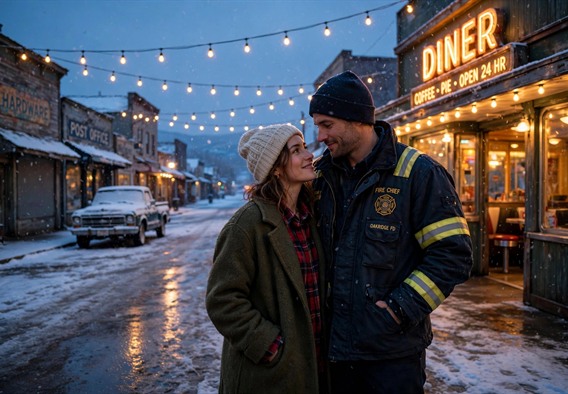
They did not get engaged at the rink, because Dmitri had read enough of her rules to know she would find it too neat. He proposed in the town diner, over pancakes, with a ring taped under the syrup dispenser like the world's stickiest surprise element, and she laughed so hard she knocked her coffee, cinnamon and all, into her own lap, and said yes before the napkins arrived.
The wedding was small and happened in October, on the day the rink opened its season, so that half the town was already assembled and the other half arrived within the hour. Anatoly's letter hung framed in the rink lobby by then, next to a photograph of Nadia and Dmitri at seventeen and eighteen, caught mid-lift in the first element they ever did together, both of them already holding on a half second longer than the element required.
Under the photo, someone, Marta, obviously, had added a caption in marker: They came home before they decided what home means.
On their first anniversary, Nadia and Dmitri skated the long program again at dawn, alone, no audience, no scores, just breath and blades and the old music, and at the top of the final press lift she looked down at him and he was already looking up, and neither of them mouthed anything, because there was nothing left to say that the ice did not already know.
The Cedar Hollow Ice Center still uses pine cleaner, imported at ruinous expense, because some inheritances are non-negotiable.
Noah Carrington
Noah covers sports romance and forced-proximity heat: rivalries, road trips, and the quiet moment after the crowd goes home.
Leave a comment
Comments