


The Salt and the Silver
The question Mara Voss could not stop asking herself, from the moment the Covenant House put her on the night ferry to Grayhaven, was a simple one with an impossible answer: what do you do when the person you were sent to destroy is the only person who has ever made you feel understood?
The Covenant
She had known the rule since before she could read it. It hung in the entryway of her grandmother's house in Avaleen, stitched on cloth gone soft with age: The witch gives her magic to the living. Never to the dead. Five words in the old script, and underneath them, in her grandmother's steadier hand, the only commentary the family had ever added: No exceptions. No grief makes an exception.
It was not a petty rule. Mara had spent twenty-nine years learning exactly why it existed, and she could recite the reasons the way other people recited their own phone numbers. Magic was drawn from living current, from the pulse of things: rivers, blood, green growing wood, the heat of a human heart. The dead did not generate current. They only stored it, the way a bottle stores sea water, and everything a witch poured into a vampire came back changed. Sharpened. Hungry. Every covenant witch who had ever tried to love one of the undead had ended the same way, hollowed out or turned, and the Houses had stopped keeping count after the third war.
So the rule stood, and Mara had never once wanted to break it. She had a quiet life in Avaleen: a greenhouse full of salt-tolerant herbs, a cat with an attitude problem, a small loyal client list of fishermen who paid her in crab and gossip to charm their nets against storm. She was a hedge witch of the Voss line, unremarkable, useful, safe.
Then the letter came, sealed in gray wax, and her quiet life ended on a Tuesday.
"The House requests Voss Mara," the courier said, not meeting her eyes. "For the Grayhaven binding."
Her grandmother had died eleven years ago, and Mara still heard her voice in every Covenant document. When the House calls a Voss, a Voss answers, or the House stops protecting the Voss. The Houses were old, bureaucratic, and merciless, and their protection was the only thing that stood between hedge witches and the messy appetite of the supernatural world.
The briefing was held in a room with no windows, run by a woman named High Warden Okonkwo who had a scar splitting one eyebrow and a voice like a filing cabinet. "The Grayhaven nest," Okonkwo said, sliding a photograph across the table. "Old blood. Older than the accords. The elder there is named Lucien Marchetti, and he has spent two centuries being, as far as we can tell, genuinely decent. Which is the problem."
"Decency is a problem?"
"Decency builds trust," Okonkwo said. "Trust builds infrastructure. The nest has grown. Sixteen vampires now, and half of them turned in the last decade, which means he is making more of them. The Covenant has voted to bind the nest's power at the source. A binding of the bloodline. One witch, working the elder's own heartline, severing his ability to create new vampires. Permanently."
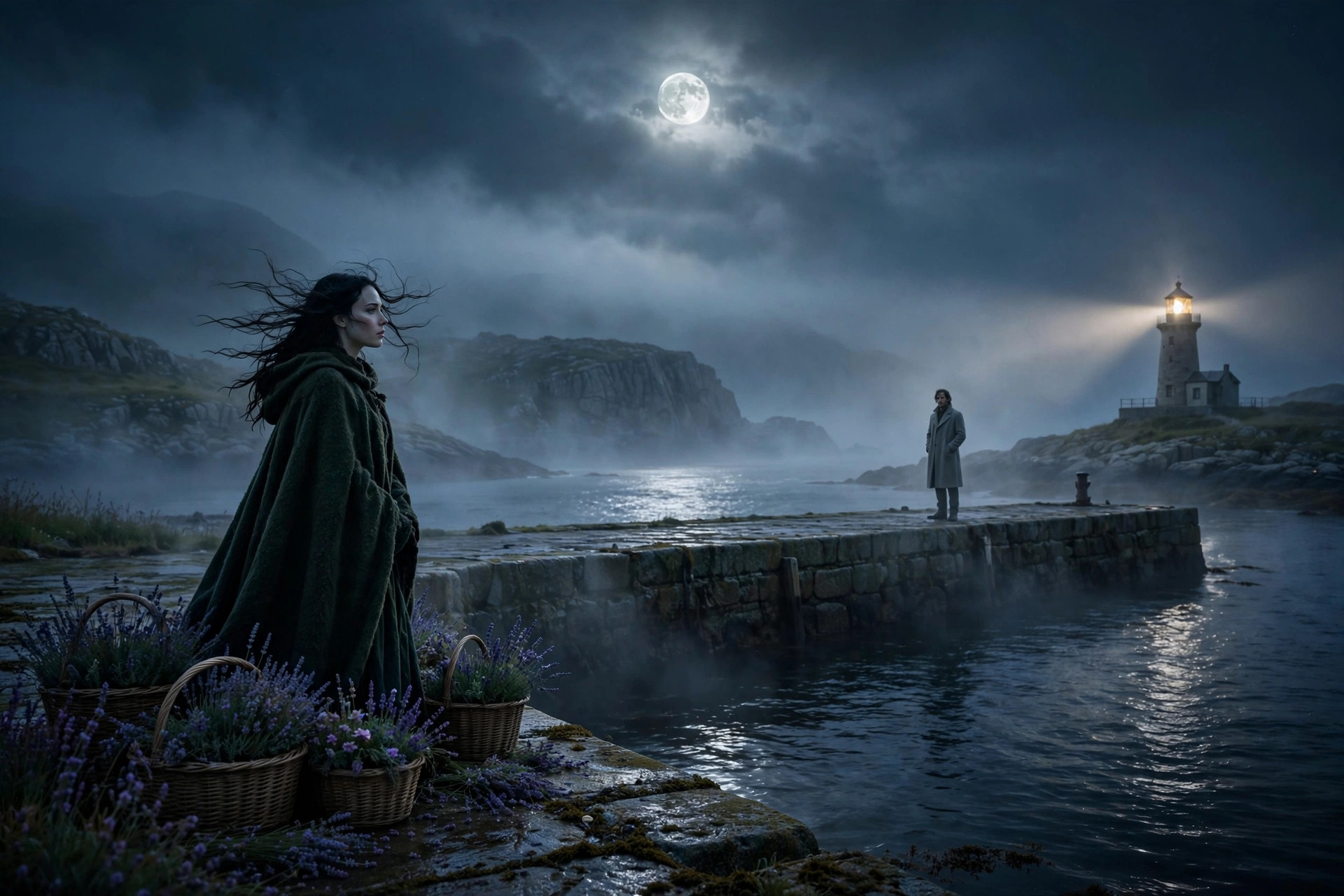
Mara looked at the photograph. It was grainy, taken from a distance: a tall man in a gray coat standing at the end of a stone pier, hands in his pockets, looking at the water like it had said something rude. Even in a blurry photo, there was something about the stillness of him. The patience.
"Why a Voss?" she asked, and her stomach knew the answer before Okonkwo said it.
"Because Voss witches work in salt and silver, and the Marchetti line has an old salt vulnerability. Because you are strong enough and expendable enough. And because," and here Okonkwo had the grace to look slightly uncomfortable, "the binding requires proximity. Trust. He has to let you in, witch. You will need to get close to him. Under no circumstances does close mean what you are currently worrying it means. The covenant holds. It always holds."
"I wasn't worrying it," Mara lied.
"They always say that," said the High Warden, and stamped her papers.
The Ferry to Grayhaven
The night ferry to Grayhaven Island ran once a week, and it was mostly empty. Mara stood at the rail with her kit bag, watching the mainland lights shrink, and tried to think of the assignment as what it was supposed to be: a job. A spell with steps. Gather the heartline, anchor it in silver, speak the binding in salt, go home, get paid, get back to her greenhouse.
The trouble with bindings of the bloodline, the brief had admitted in its driest footnote, was that they could not be done by force. A vampire's heart was a locked room, and the key was consent. That was the cruelty built into the whole design: the House needed the monster to open the door willingly.
So I lie to him, she told the dark water. I get close. I learn his griefs. I find the door.
She had done cons before. Nothing large. She had talked a paranoid warlock into surrendering a cursed anchor once, mostly by agreeing with everything he said about modern music. She could do this. She had spent her whole life behind the covenant, safe on the living side of a line drawn in salt, and the line had never once cost her anything.
Grayhaven announced itself by smell first: fish and pine and old stone. The town clung to the island's south shore, all crooked lanes and salt-bleached shingles, and above it, on the black headland, stood the Marchetti house, which was less a house than a stubbornness, four stories of granite that had decided to outlast the sea.
The landlady of the only inn took Mara's coin and her measure in the same glance. "Here for the elder, then?" she said. "Everyone who comes for the elder is always here for the elder, and none of them ever say so."
"I'm a herbalist," Mara said. "The house buys from me."
"Course it does, dear." The landlady slid a key across the counter. "Room three. The radiator knocks at two, it's not a ghost, and if you're going up the headland, wear the good boots. The elder likes people who dress like they mean to stay."
The Elder of Grayhaven
She went up the headland the next evening, because in her experience the fastest way to a mark was to make him seek you. She had planned a whole sequence: browse the market near the pier, let her green cloak and her herb baskets advertise her trade, be discovered. It was a good plan. It survived exactly eleven minutes.
"You smell like warded salt and bad intentions," said a voice behind her, low and amused, "but your lavender is the best I've had on this island in forty years."
She turned, and Lucien Marchetti was not the man in the photograph. Photographs flattened him. He was tall and lean in the way of things that had been lean a very long time, dark-haired, gray-eyed, with a face that should have been forgettable and was not, because of the attention in it. He looked at her the way scholars look at manuscripts. Like she might contain something worth reading slowly.
"You're the new herbalist," he said. "The House sent you three weeks after my last one retired. That's fast, for the House."
"Maybe I'm just good."
"Maybe." He smiled, and it was a real smile, crooked and tired. "I'm not going to ask what you are. Grayhaven has a policy. Everyone who washes up here gets to be whatever they say they are, for as long as they behave. It's the only rule that's ever worked."
"That's a remarkably tolerant rule for a vampire."
"I find tolerance cheaper than war," he said. "Most people call it laziness. I call it policy." He gestured at her basket. "The woman who runs the nursery on Fleet Lane has blight in her rosehips. If you're selling, sell there first. The town pays before the house does, always. I won't have it the other way around."
And he walked off toward the pier, hands in the pockets of his gray coat, leaving Mara standing in the fish-smelling dusk with her whole script in ruins, because she had prepared for suspicion, for charm, for the ancient predator testing her with riddles. She had not prepared for a monster who sent her to his own customers first.
Good, she told herself that night, staring at the radiator-stained ceiling of room three. He trusts easily. That makes the door easier to find.
The thought sat in her chest like a swallowed stone.
The Greenhouse at the End of the World
The trouble with living in Grayhaven was that it was small, and the trouble with small towns was that they made you a person. In Avaleen, Mara was the Voss witch, category: hedge, threat level: negligible. In Grayhaven, within a month, she was the woman who fixed the nursery's blight, who talked old Hal Ferro out of selling his boat after his wife died, who argued fish politics at the Anchor Tap with the conviction of someone who had never seen the sea before age twenty-nine.
And the elder came to the market. That was the problem. He came every week, openly, in daylight hours at the edge of the season when the sun was kind, and he bought pears, and he asked after people's children, and he stood in the square talking to the ferry captain about engine parts with the fussy expertise of a man who had clearly fixed the engine himself more than once.
"You're staring," he said, the fourth week, appearing beside her stall with a basket of pears and no warning whatsoever.
"You're shopping. In October. In daylight."
"The accord gives me six hundred comfortable hours a year. I budget them." He weighed a pear with theatrical seriousness. "Also, I like the noise. You spend enough time being quiet and eternal, you develop opinions about noise."
"What are yours?"
"In favor," he said. "Strongly."
She started keeping a journal of things she noticed about him, because that was tradecraft, she told herself, that was building the file that would find the door. He never eats in front of the town. He tips like an apology. He remembers everyone's dead. When the widow Carrick cried at his stall about her son, he stood there and let her, and he said, I know, and you could tell he did.
The journal got less like a file and more like a diary somewhere around the entry that read, simply, He asked me what I wanted the money for, and when I said a greenhouse, he offered the headland's south slope, because it gets morning sun, and he said, and I quote, you'll want somewhere the light can find you. Who says that? Who thinks like that?
The greenhouse went up in November, on the south slope of the headland, ten minutes' walk below the granite house. He helped her build it. That was the other problem. Vampires were strong, and it turned out Lucien Marchetti had decided, two hundred years ago or possibly last Tuesday, that strength was for carrying things for people: beams of glass, sacks of soil, once, memorably, the entire disassembled frame of a cold frame up a cliff path because the cart track had washed out.
"You could make people do this," she said, watching him lift a roof beam like a picnic basket. "You're an elder. You have sixteen vampires. You could be terrifying."
"I was terrifying," he said. "1620 through about 1740. Didn't care for it." He set the beam, and dusted his hands, which was funny, because he didn't collect dust. "You spend a century being a monster, and then one night you carry a farmer's cart out of a flooded ford, and he thanks you, and you realize you have not been thanked for anything in eighty years. After that it's just arithmetic. Fear is expensive. This," he gestured at the half-built greenhouse, at the town below with its lamplights coming on, "is cheap."
"That's the most cynical defense of goodness I've ever heard."
"I'm two hundred and eighty years old. Everything I say is a defense of goodness. The reasons are just old."
She laughed, and he looked at her when she laughed the way he looked at the sea, like it had said something worth listening to, and the stone in her chest turned over.
That night she wrote in the journal: Tell the House it's working. Don't look at what working means.
The Rule and the Rain
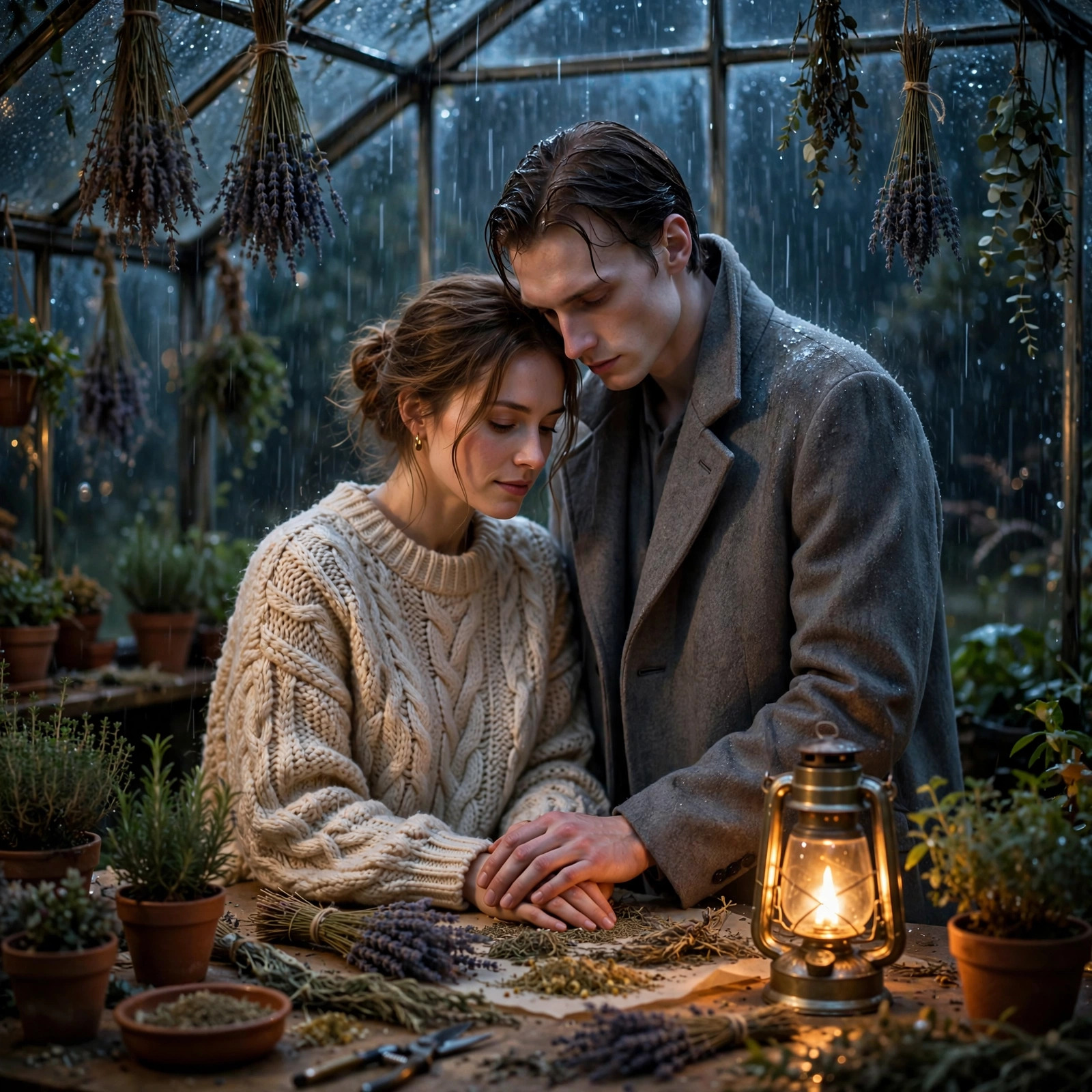
It came to a head in December, in the greenhouse, in the rain.
She had been on the island four months. The House had sent two letters, each cooler than the last, asking when the binding would begin. She had written back that trust was slow work. Both statements were true. Neither was the whole truth.
That night he came to the greenhouse through the storm, coat soaked, because a fledgling in his nest, a nineteen-year-old boy turned in a car accident that should have killed him outright, had gone into something the old books called the withering. The hunger without the strength. The stored current in his blood running out, because he had been turned too young, too fast, by a sire who had died before teaching him anything.
"The books say there is a way," Lucien said. He stood in the doorway with rain coming off him in ropes, and he was not performing anything, and that was what undid her. He had come to her. "Not turning him back. Nothing turns back. But steadying him. Feeding the current through a donor witch, a rite, the old rite of the warm hand. I have offered my own blood, my own stored centuries, and it passes through him like water through a net. He needs living current. He needs a witch."
The greenhouse was very quiet. The rain hit the glass like a held breath.
"You know what you're asking," Mara said.
"I know what it costs you," he said. "I've known since the salt on your boots, the first week. You're covenant. Voss line, salt and silver, and there is exactly one rule your House would send a woman like you to enforce." He said it flatly, without accusation. "I have known for four months, Mara. I have been hoping you would tell me yourself."
"Then you know I came here for you." The words came out of her like something being lanced. "Not the nest. You. The binding takes the elder's heartline. They want to sever your ability to make vampires. To end your line. I was sent to get close to you and cut you off from your own future, and I have been having dinner with you and building a greenhouse with you and writing reports about your trustworthiness while I waited for the door to open, and I let it go on because every week I told myself next week, next week I'll find the way to do it."
"I know," he said.
"You knew. And you helped me build a greenhouse."
"You wanted a greenhouse," he said simply. "I wanted the person who wanted one. Those aren't in conflict yet. They might be." He looked at his hands. "Here is what I actually came to say. Help the boy, and I will open the door for your binding myself. Tonight. Willingly, fully, whatever severing your House wants. Take my line's future if the future costs the lives of children like him, because I have watched your face for four months and I would rather be cut off by you than trusted by anyone else."
"That's not the deal you think it is," she said, and her voice broke on it. "If I help him, I break covenant. The House strips my protections, probably my registration, possibly my magic, they call it the quieting, and the whole reason the rule exists is that poured-out current through the dead comes back hungry. They say the witch is always hollowed. They say."
"They say," he repeated. "What do you say?"
And that was the question, wasn't it. The rule existed because of grief, because witches in love with the dead had poured themselves out until nothing was left, because the current changed in transit, because every case in the archives ended badly. But every case in the archives was a witch alone, hiding the drain, bleeding out in secret for a lover who never knew the price. Nobody had ever done this in the open. Nobody had ever been offered the door and the choice both.
"Say what you actually want," she said. "Not the trade. Not the noble severing. If I could help him with no cost to anyone, what would you want?"
"I would want you to help him," Lucien said. "And then I would want to have dinner with you on Fridays for as long as you'll allow it, and I would want to know how your lavender does in spring, and I would want, and this is the greedy part, I would want you to choose this island with your eyes open, not because of a covenant or a binding or a deal, but because you wanted to. That's all. I've been alive a long time. I know what wanting costs, and I've decided it's worth it, and I will not make it your bill to pay."
The rain kept hitting the glass. Mara stood in her greenhouse full of living things, salt witch, Voss line, five words stitched on cloth, and felt the rule that had held her whole life like a harbor wall and understood, all at once, that the wall had never been protecting her from the dead.
It had been protecting her from choosing.
"Yes," she said. "To the boy. To the Fridays. To the eyes open." She took a breath. "And you should know the rite requires contact. Skin. My hands on his, for an hour, current flowing the whole time. It's not a ritual you can do at arm's length."
"I know," he said. "I read the same books you did. Which is why I came in person to ask."
"You're saying you consent to me touching him."
"I'm saying the boy consents, I consent, and you," and here the tired crooked smile came back, "consented eleven seconds ago, and I am given to understand that's the only kind of magic worth doing."
The Warm Hand
The rite took place in the nest's front room, which was not the crypt-flanked horror of every book but a parlor with a stone fireplace and too many chairs, because sixteen vampires accumulate furniture the way rivers accumulate driftwood. The fledgling's name was Theo. He was gray as ash and shaking, and before she began he gripped her wrist with what little strength he had.
"You don't have to," he rasped. "I heard him in the hall. You don't owe me anything."
"I know," Mara said. "That's why it counts. Ready?"
"No," he said honestly, and she liked him immediately, and began.
The current moved through her like a river through a lock: her living warmth, drawn up from the pulse in her own wrists, poured across the gap between living and dead. And it did change in transit. The books were right about that. It came back to her along the loop thinned and sharp and seeking, a cold bright wire of need, and she understood in her bones why the rule existed, because that wire, unmet, unwitnessed, poured out night after night in secret, would carve a person hollow. That was the truth in the stitched cloth. The rule had read the bodies and generalized.
But the books had one thing wrong. The current did not come back hungry.
It came back lonely.
And she was not alone. Lucien knelt on her other side, his hand over the loop point at her shoulder, not feeding from her, not drawing, just present, a gray anchor in the flow, and where the lonely wire came back to her it touched him first, and what came through him was met. Witnessed. Answered. The hunger in the returning current hit his two-hundred-and-eighty years of patience and came out the other side as something she could hold.
It took four hours. When it was done, Theo slept like the living, color in his face, and Mara sat back against the chair and found she was crying without having decided to.
"Hollowed?" Lucian asked quietly.
"No," she said, surprised. "Tired. Extremely tired. But it's like... it's like the current came back with more in it, not less. Because it made a round trip. Because it was answered." She wiped her face. "Your House's archives are going to be so embarrassed."
"I'll write to them personally," he said, and offered her his handkerchief, which was clean, which was absurd, which was when she started laughing too, and the two of them sat in a vampire nest at four in the morning, laughing and crying over a sleeping boy, while somewhere out over Grayhaven the sky went the color of pearl.
The Cost, Paid in Full View
The House's response arrived in nine days, which was fast for the House, and it was everything she expected. Notice of covenant breach. Summon to Avaleen for assessment of the quieting. Suspension of protections, effective immediately. A second letter, addressed not to her but to the elder of Grayhaven, informing him that the Voss witch's binding commission was void and that the House would dispatch a more compliant instrument in spring.
She read both letters at the greenhouse table with Lucien across from her, and the fear was real, she would not pretend otherwise. The quieting meant facing the supernatural world without armor. It meant possibly losing her magic, the thing she had loved since before she loved anything else. It meant her name in the archives next to the cautionary tales.
"You could still let them do it," she said. "The binding. Your line's future back, my standing restored, a clean report that I found the door and you opened it. They'd take that trade. It's the version where everyone's cost is theoretical."
"Is that what you want?"
"No," she said. "I want the version where the rule changes."
"Then we write to the House," he said, "and we make them an offer they have to take, because it's cheaper than war and better than fear. Sixteen vampires in this nest, and every one of them turned by consent, every one of them fed by consent, every one of them governed by rules I'll put in writing. In exchange: your standing restored, your research on the warm hand rite entered into the archives under your name, and the covenant amended. One line. One honest line, after two hundred years of generalizing from grief."
"And what line?"
He said it slowly, like a man laying a keel. "The witch gives her magic to the living, and to the dead who answer. Never alone. Never in secret. Never without witness."
"You've been drafting this," she said.
"Since the fourth month," he admitted. "The pears were a cover."
The negotiation took a year and the better part of her savings, and she would be lying if she said it was painless. There were hearings. There was a three-day assessment in Avaleen in a room with no windows, where High Warden Okonkwo examined her current, her reserves, her memory, and finally her face, for a long silent minute.
"The archives say you should be hollowed," Okonkwo said.
"The archives say a lot of things about situations where witches bled alone," Mara said. "Test me again in five years. That's the honest offer. If I'm hollowed, amend it back."
"You realize," the High Warden said, stamping something, "that you are proposing we rewrite five words that have held for two centuries on the strength of one rite and one elderly vampire's good behavior."
"I'm proposing you rewrite them on the strength of the truth," Mara said. "The rule was never wrong about the danger. It was wrong about the cure. Loneliness was always the thing that hollowed us. You just couldn't measure it, so you banned the dead instead."
Okonkwo signed the amendment in March. The nesting vampires of Grayhaven signed the accords in April, sixteen signatures in a clerkish hand, with a seventeenth signature beneath them, old and flowing, that the archivist later said was the oldest thing in the file.
Friday, Indefinitely
The greenhouse did well in spring. The lavender, in particular, went mad, whole purple ranks of it humming with the contented current of well-tended soil, and Mara sold out of it every market day to the townsfolk of Grayhaven, who had long ago stopped pretending they didn't know what she was and what he was and had simply, in the practical way of island people, folded the whole matter in around their lives like an extra season.
They had dinner on Fridays. He cooked, because he had two hundred and eighty years of recipes and opinions about noise, and she brought wine she could drink and he could not, and afterward they walked the headland in the hours when the sea went silver. Theo, steadied and sunny, worked at the nursery now and had strong opinions about rosehips. The radiator in room three still knocked at two, but she had moved out of room three in September, into the granite house on the headland, which turned out to have a room with morning sun and a view of her own greenhouse, and a very old man's patience in every corner of it.
One night in June, walking the pier where she had first seen his photograph, he stopped and looked at the water and said, "Do you ever miss the wall? The certainty of it. Knowing exactly where you stood."
Mara considered it honestly, because that was their arrangement: eyes open.
"Sometimes I miss the harbor," she said. "But I never once, in twenty-nine years behind that wall, felt like this. Which is to say, chosen and choosing at the same time, on purpose, in daylight." She laced her fingers through his, cool and sure. "The rule kept witches alive. It just never once let us live. You don't get to keep both, apparently. You have to pick."
"And you picked?"
"I picked," she said. "Fridays. Indefinitely."
He smiled, the crooked tired real one, and the lighthouse swept the harbor, and below the headland the greenhouse held its glass roof up against the night the way it did every night, keeping the living things warm and letting the rain keep its distance, which was, when she thought about it, exactly the kind of magic worth doing.
The witch gives her magic to the living, and to the dead who answer. Never alone. Never in secret. Never without witness.
Author's note: The warm hand rite described in this story is fiction, but the idea at its heart is not. Every old rule about love was written by someone who only ever saw it drain. Ask anyone still standing at the end of one: it was always the loneliness.

Cade Ellison
Cade specializes in romantasy and paranormal romance: magic systems with rules, courts with knives, and longing that rearranges destinies.
Leave a comment
Comments