



The Debt We Kept
What happens when the woman hired to expose a man's sins starts wanting to keep his secrets, and the man who trusts no one starts wanting to be trusted by her?
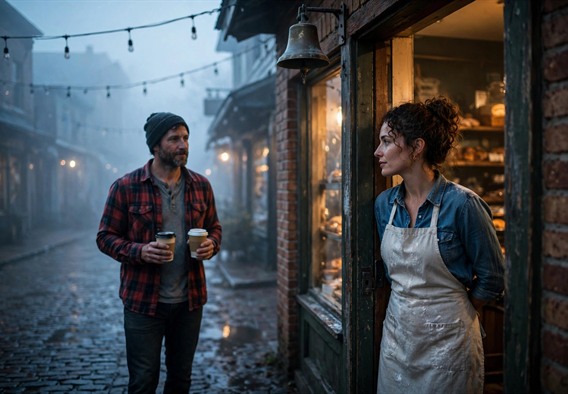
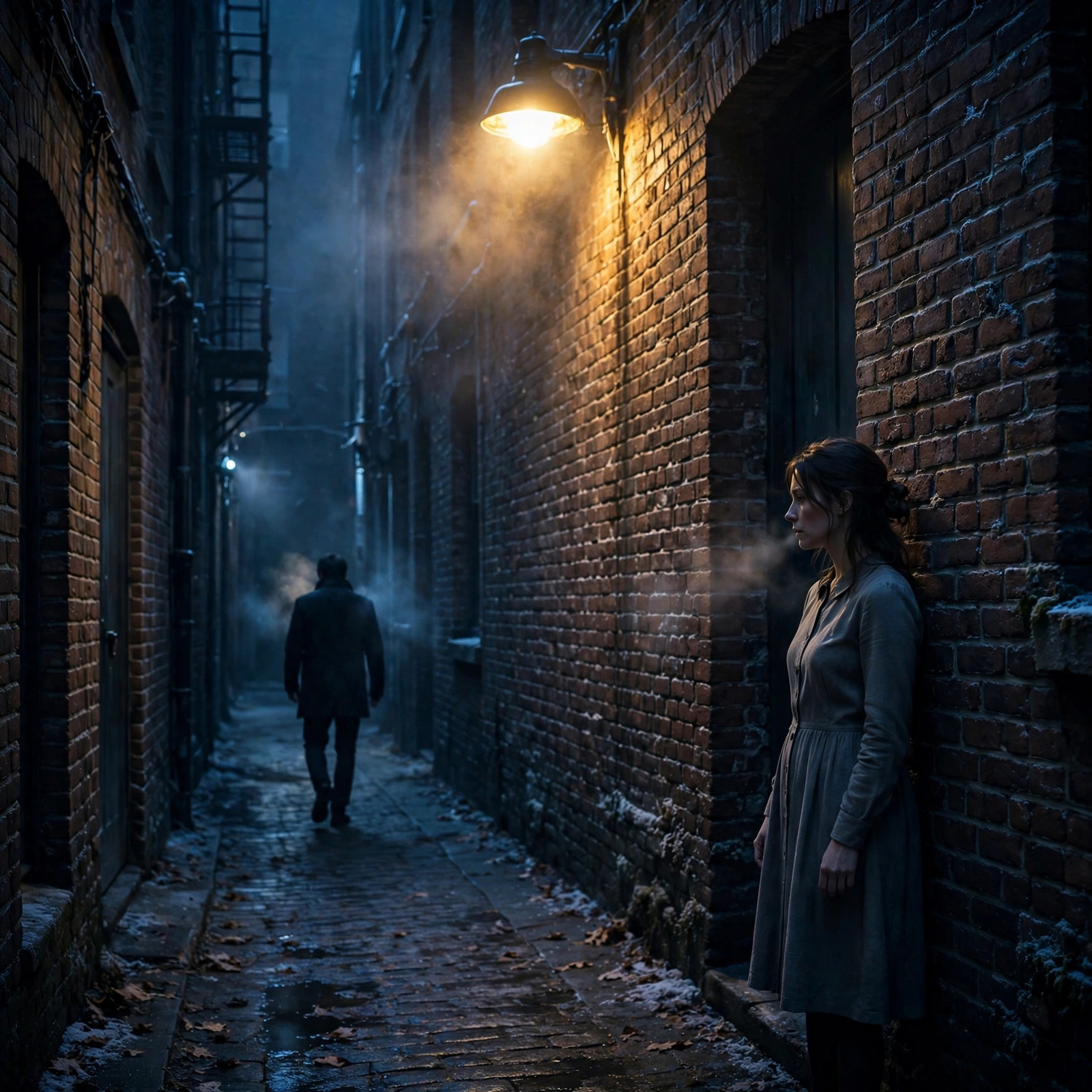
The file arrived on a Thursday, wrapped in a confidentiality banner so thick it felt like a threat. Wren Okafor read it twice at her kitchen table, coffee going cold, and understood within the first page that this job would not be like the others. The client was anonymous. The subject was the Amberline Room, a jazz club in the old tannery district, and the engagement was simple in language and impossible in spirit: determine whether its owner, Declan Hart, was laundering money for the Ferro family, and if so, build the paper trail that would bury him. Wren had spent nine years finding the arithmetic under other people's lies. Shell companies, inflated invoices, charity funds that fed private accounts. She was good because she was patient and because she had learned young that the people who lied loudest were usually protecting something small and sad. A sick sister. A gambling debt. Fear. She read the file a third time and noticed what the anonymous client had not bothered to hide well: a photograph of Declan Hart taken from across the street, grainy, his head tipped back against the club's brick wall, eyes closed, a cigarette burning down between two fingers. He looked like a man at his own funeral who had decided to enjoy the flowers. Something in the photograph made her uneasy, and Wren had learned to trust that specific unease. It was the same feeling she got when a ledger balanced too perfectly. She took the job anyway. The fee would keep her mother's care home funded through the winter, and Wren had never once in her adult life let a feeling outrank a need. She would think about that choice, later, as the first of many.
One: The Man Behind the Bar
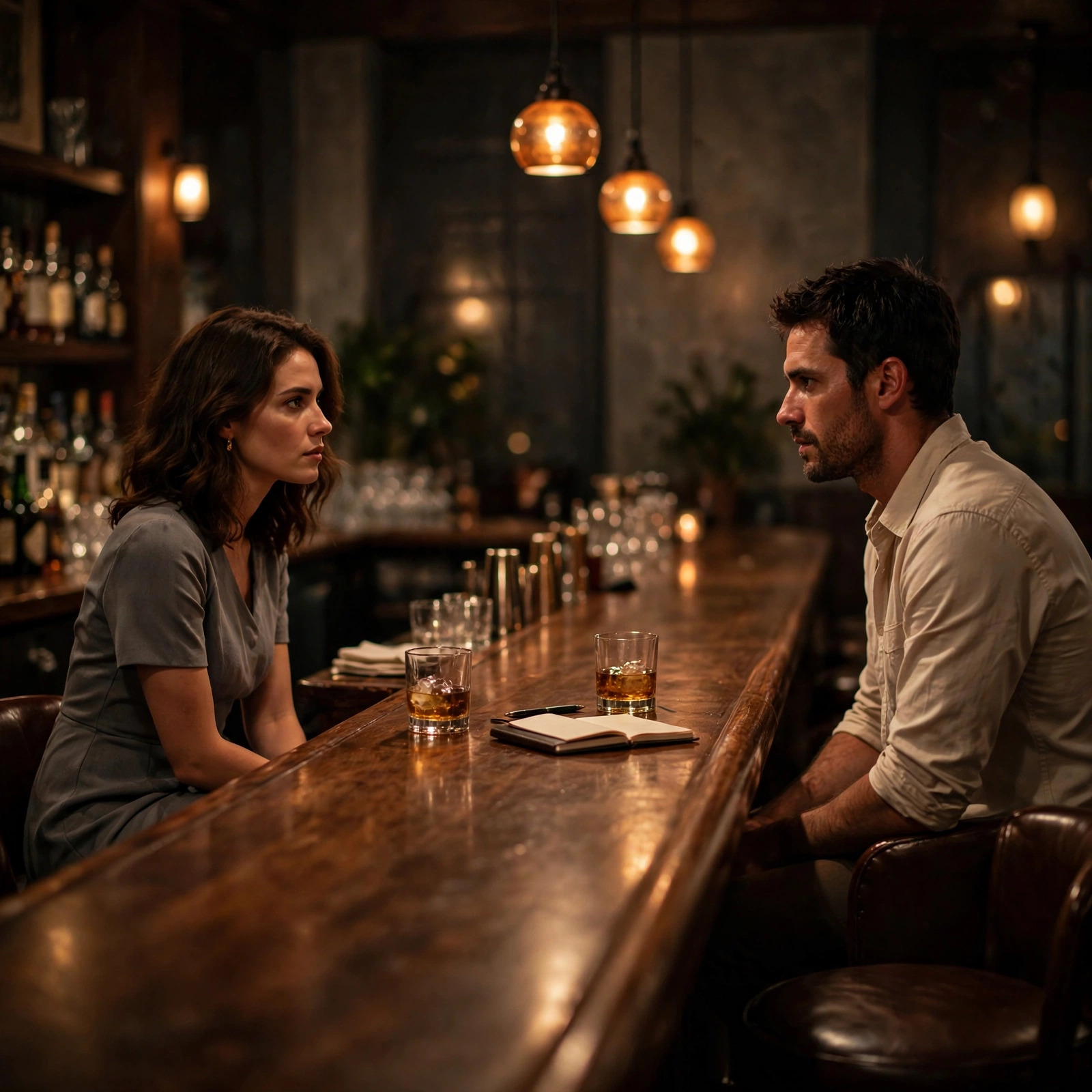
Declan Hart knew within eleven seconds that the woman in the gray dress seated at the corner of his bar was trouble, and he knew it in the old way, in the way that had kept him alive through two decades of owning the wrong kind of real estate. She didn't drink. She watched hands. She had a notebook she never opened, and when the house band swung into the second set, she watched the drummer's tips and not the drummer. Declan had spent enough years around federal people to recognize the species, and this one had teeth. He poured her the club's best rye anyway. Unasked. Set it down with a napkin and a look. "I didn't order that," she said. Her voice was low, unhurried, the voice of a woman who had never once needed to raise it. "On the house. You look like someone doing hard math." "Maybe I'm just deciding whether to stay." "Stay," he said. "The rye's better than the company." That earned him the smallest lift of one brow, which on most women would have been nothing and on her felt like being audited down to the penny. Her name, when the bartender finally coaxed it out, was Wren. Just Wren. No surname, no story. She came back the next Thursday, and the Thursday after that, and Declan let her, because a man in his position had exactly two options when a predator entered the building. He could circle the wagons and confirm every suspicion, or he could stand still and let her starve on nothing. He told himself that was the reason. Standing still. Letting her starve. It was a good lie. He'd had practice with better ones.
Two: The Ledger That Lied Politely
Wren worked days at a rented desk four blocks away, under a shell engagement her anonymous client had structured through a law firm with a brass plaque and no visible partners. Nights, she sat at the Amberline Room and drank one rye slowly and mapped the club the way she mapped any organism: revenue, cost, rhythm, pulse. The books were beautiful. That was the first thing she noticed and the thing that kept her awake. Small clubs ran messy. Cash skims, handwritten tabs, a bartender's cousin on payroll who never showed. The Amberline's books were clean the way a hospital floor is clean. Somebody scrubbed them, and somebody with real skill. On her fourth visit, Declan Hart sat down at the far end of her corner uninvited and stayed there for an hour without saying more than six words. She felt his attention like weather. When she left, he was still watching her walk to the door, and she felt that too, all the way down the block, a warmth between her shoulder blades she could not decide was menace or something worse. "You always watch your customers leave?" she asked the next week. "Only the ones I can't figure out." "And what's your working theory?" He turned his glass on the bar, once, a full slow rotation. "That you're either the best customer this club has ever had, or the beginning of a very bad year." "Which do you prefer?" "I've survived bad years," he said. "It's the good ones that kill me." She laughed before she could stop herself, one short exhale, and his whole face changed for a fraction of a second, like a window thrown open in a house she'd assumed was empty. Then it shut again. She wrote that down in her memory, not her notebook. The window. The shut.
Three: What Declan Would Not Say
Here is what Declan Hart owed and to whom, a list he kept in no ledger anywhere: he owed the Ferro family a sum with too many zeroes to speak aloud in his own club, incurred four years ago when his brother Tom needed a surgeon in a country with no hospitals and no questions, and Declan had gone to men whose money came with hooks. Here is what he had done since: paid, and paid, and paid, and discovered that a debt to the Ferros was a tap, not a well. It did not empty. It only ran. Here is what he suspected, correctly, within a month of the woman in gray: she was building a case against him, and her anonymous client was one of three people in the city who wanted Declan Hart in a courtroom, and none of the three wanted him there alive. And here is what he could not explain to anyone, least of all himself: he kept not stopping her. He could have. One call to one nameless partner and Wren Okafor, whose name he'd had inside forty-eight hours, would have been pulled off the engagement, discredited, or simply made to feel so unsafe in the tannery district that she'd never come back. He had done less for smaller reasons. Instead he fixed the sticking hinge on the ladies' room door because she'd mentioned it in passing to the bartender. Instead he started keeping a bottle of the Chilean sauvignon blanc she'd once said she missed from her student days, unrequested, unmentioned, appearing at her place setting like a small conspiracy. Instead he learned that she liked the band's second set better than the first because the second set was when the drummer stopped performing and started telling the truth, and he found himself listening to his own club differently because of her. "You're staring," his doorman, Cole, observed one night, not unkindly. "I'm assessing a threat." "Sure," Cole said. "You want me to assess the wine you ordered specially for the threat?" Declan looked at him the way he looked at men who had forgotten their place, and Cole, who had not, grinned, and Declan turned back to the bar and to the woman at the end of it and thought, with the flat clarity of a man reading his own autopsy: this is how it happens. Not with bullets. With wine and Thursdays.
Four: What Wren Could Not Write Down
Wren filed her interim report on a Tuesday and hated every page of it. It was a good report. Methodical, sourced, damning in the conditional tense. The Amberline Room's books showed a pattern of revenue smoothing consistent with laundering. Mr. Hart's personal accounts showed withdrawals that mapped, with eerie precision, onto dates when Ferro-affiliated shell entities recorded no activity at all, which was its own kind of confession: money going somewhere it refused to be seen. Her client would be pleased. She did not know her client's face, only the intermediary's voice on the encrypted line, smooth and rehearsed, a voice that asked twice whether she had found anything that "cleared him," and Wren had noticed that too. Innocent clients never asked that question twice. She was building a case against a man who fixed door hinges without being asked and kept her favorite wine in stock and watched her leave every Thursday like a lighthouse doing its one job, and the case was probably true, and the man was probably guilty, and none of it lined up with the window that opened in his face when she laughed. Guilty men flattered her. They flirted, they bargained, they offered her things in parking garages. Declan Hart had never once asked what she'd found. That frightened her more than anything, because there were only two kinds of men who never asked. Men with nothing to hide, and men who had already decided what she was worth to him alive. She went to the club on a Friday, off schedule, to break her own pattern and see what changed. Everything changed. He was behind the bar in shirtsleeves, filling in for a sick bartender, and he moved like a man who had done it for years, and when he saw her come in something crossed his face that no one would have caught unless they had spent weeks cataloguing his face the way she had been cataloguing it against her own better judgment. It was fear. One second of it, aimed at her. Then he poured her the rye she never ordered and asked if she wanted the second set, and she said yes, and they were both lying with such competence that it was almost a marriage of a kind.
Five: The Almost
It happened in November, after the first cold snap, in the alley behind the club where she'd gone for air and found him already there, coatless in the cold, cigarette unlit between his fingers like a prop he'd forgotten the lines for. "You shouldn't be out here alone," he said. "I'm not alone. You're here." "That's the problem," he said, and the sentence came out of him before he could catch it, and she saw it cost him, saw his jaw set against whatever else was stacked up behind it. The alley was narrow and their breath mingled in the cold and Wren felt the whole season's worth of unspoken material press against the thin wall of her professional discipline. Tell him, some part of her said. Tell him a client is paying you to end him and you can't find it in you to want it done. Ask him what the money is for. Ask him why he looks afraid of you every third Thursday. "Declan." She had never used his first name. It landed between them like a dropped glass. He went very still. "Say the rest." "If I told you I had a way out for you, would you take it? Even if it cost you something you've already accepted losing?" And there it was, the almost, hovering in the freezing air. Because what she had meant, what her treacherous heart had built the sentence to mean, was: I am the way out. Burn the engagement. Walk away with me from both of our ruinous obligations. She watched him understand half of it and choose, visibly, deliberately, to understand none of it. "There's no way out," he said quietly. "There's only who gets hurt on the way through. I've done my math on that. You should do yours." "That's not an answer." "It's the only kind I've got." He dropped the cigarette, ground it under his heel with unnecessary care, and walked back inside, and Wren stood in the cold and understood with total certainty that she had just been refused by a man protecting her, and could not prove it, and could not stop wanting him anyway.
Six: The Client's Voice
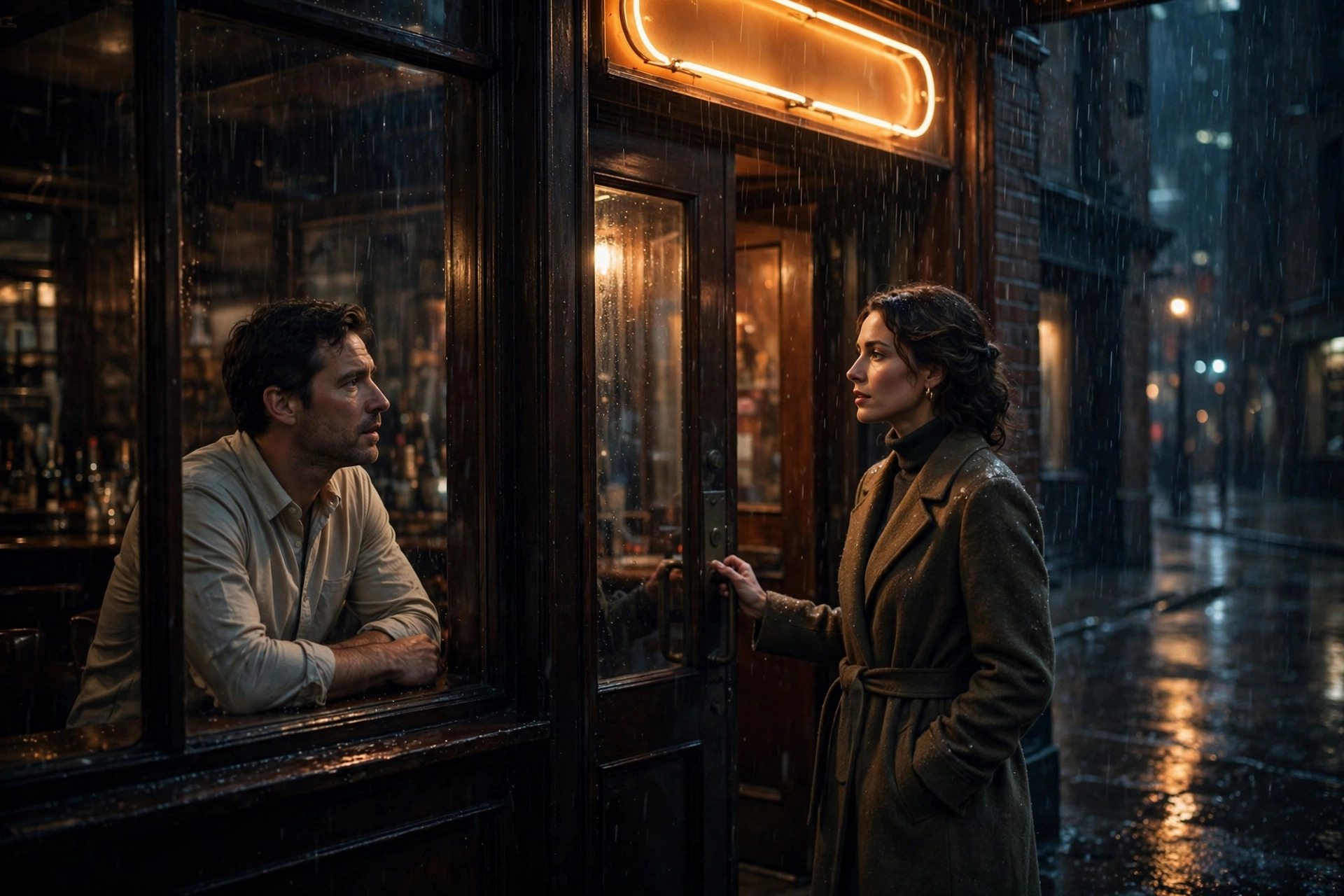
The encrypted call came at seven in the morning, and the intermediary's smooth voice was less smooth than usual. "We're moving to the final phase. We need the Ferro connection documented, not inferred. Names, dates, transfer mechanics. Can you deliver by the fifteenth?" "I can deliver what's true," Wren said. "That's always been the standard." "What's true," the voice repeated, tasting it. "Ms. Okafor, a word of professional caution. Subjects of investigations of this nature have been known to approach contractors. Become friendly. It's a known technique. We'd hate for your objectivity to be compromised. We'd hate more to have to act on it." The call ended. Wren sat in her rented office with her hands flat on the desk and made herself name the thing she had been circling for two months. Her client did not want Declan Hart convicted. Her client wanted him delivered. The final phase was not a courtroom. She had built a map for people who intended to use it as a schedule. She thought of the photograph in the original file, Declan against the brick with his eyes closed, and reread it now with new eyes. Not a surveillance photo. A countdown. She thought of the alley. There's only who gets hurt on the way through. He had known. He had known what was coming for him, for longer than she had, and he had spent their every Thursday not asking what she'd found because the answer would only give him one more thing he'd have to decide whether to take from her. Wren Okafor, who had never once let a feeling outrank a need, sat in her office and did something she had no professional framework for. She called in sick to the client. And then she drove to the tannery district at nine in the morning, to a jazz club that didn't open until six, and knocked on the door in the rain.
Seven: The Truth, Unbarred
He opened the door in a white shirt with the sleeves rolled, unshaved, and the sight of her undid something in his posture that she watched happen in real time. "It's nine in the morning," he said. "I know what time it is." "You never come before dark." "I need you to let me in, Declan, and I need you to listen before you decide anything, because I've been paid to end you and I'm here to tell you how and I'm here to tell you I'm not going to." The pause lasted three heartbeats. Then he stepped aside. She told him all of it, at the bar with the morning light coming through the front windows, harsh and unflattering, the club stripped of its nighttime romance. The anonymous client. The shell engagement. The final phase. Her certainty that the client was one of the three names she'd assembled, and her strong inference it was Victor Sarn, the Ferros' lawyer, the man who managed the tap Declan could not shut off. "Sarn," Declan said, when she finished. "Of course it's Sarn. He wants me gone before the Ferros restructure and my debt gets sold to someone who isn't sentimental." "You're not surprised." "I've been surprised exactly once in my life and it cost me my brother's spine," he said. "Everything since has been scheduling." He told her the rest then, all of it, Tom and the surgeon and the hooks in the money, and Wren sat with her hands around a coffee he'd made her without asking and understood the shape of the man at last. Not a launderer. A debtor. A man who had committed the crime of loving one person more than his own future, in a city that priced such love in zeroes. "The books," she said slowly. "They're clean because you clean them. You're not moving their money. You're hiding yours. Every dollar you can peel off, you're paying them back and hiding the payments so Sarn can't prove you have anything left worth squeezing." He looked at her for a long moment. "You're the first person in four years to read that correctly." "You never stopped me." "No." "Why?" He turned his cup a full slow rotation on the bar, the old tell, and when he answered his voice was stripped down to joists. "Because every Thursday you came back, and I kept thinking, whatever she's building, at least someone is looking at my life that closely. At least someone is reading all of it." A pause. "You don't get looked at, Wren. You get used, or feared, or paid. You don't get looked at." The silence that followed was the loudest room she had ever been in.
Eight: The Choice That Proved It
Here is what Wren did on the thirteenth, two days before her deadline. She flew to the Caymans under her own name, at her own expense, and spent eighteen hours in a records office and a bank lobby and a notary's back room, and she came back with something no anonymous client had asked for and no anonymous client wanted: proof that the Amberline's hidden payments to the Ferros were structured as repayment of a documented personal loan, dated, notarized, legitimate in every jurisdiction that mattered. Not laundering. Debt service. Ugly, but legal, and lethal to the narrative Sarn had paid her to build. And here is what Declan did on the fourteenth. He went alone, without telling her, to a hotel bar where Victor Sarn drank his whisky, and he sat down and put an envelope on the table containing two things: the notarized loan documents showing his debt was clean and provable, and a recording, four years old, of a phone call in which Sarn had personally instructed the Ferros' accountant to structure the original loan as leverage. Sarn had defrauded his own clients. The recording was Declan's life insurance, and every instinct he had, every scar, every rule that had kept him breathing, said: use it, crush the man, buy your freedom with the threat. Instead he slid the envelope across and said, "Deliver this to the Ferros. Tell them the tap is shut, the debt is settled as of tonight, and the recording stays with me as a courtesy they'll never need to think about again. And tell them if anyone I care about is ever approached by a contractor again, the courtesy ends." Sarn looked at the envelope and then at him. "You'd burn your only leverage for a woman you've known three months?" "I'd burn it for a woman who flew eleven hundred miles to keep me from being killed," Declan said. "You were going to have me killed. I want you to sit with the fact that the only reason you're still drinking that whisky is her." He walked out of the hotel with his heart going like a drummer in a second set, telling the truth at last, and the strangest part, the part he would carry, was how light he felt. Four years of arithmetic, and the answer had turned out to be subtraction.
Nine: The Second Set
The fifteenth came and went. Wren sent her anonymous client a formal termination letter, a full refund of the fee, and a single page of findings that read, in total: No evidence of money laundering was found. The subject's finances reflect repayment of a personal debt. My engagement is concluded. Further contact will be reported. The voice did not call again. Three days later a courier delivered an envelope to her apartment containing a photograph of Declan at a Ferro family dinner table, alive, unbound, drinking their wine like a man closing a tab, and a note in an elegant hand: The account is settled. The contractor is retired. Consider this our apology. She took the note to the club that Thursday and put it on the bar in front of him without a word. Declan read it twice. "They're apologizing." "They're afraid of you. There's a difference but it's small." "I didn't tell you what I did." "I know you didn't. Sarn's lawyer's paralegal drinks at my cousin's restaurant and cannot hold her chianti." She looked at him over the rim of her glass, and for once she let him see all of it, every week of it, the alley and the window and the eleven hundred miles. "You spent your only leverage on me." "You flew across an ocean for me." "We're even, then." "We're not even close to even," he said, and his voice had dropped into the register she had only heard once, in the alley, before he'd caught it and killed it. "Because I've been standing a bar's length away from you since September, telling myself it was strategy. And I'm done lying in my own club." "Then say it," she said. "The whole sentence. You've never once said the whole sentence." "I'm in love with you," Declan Hart said, in the empty amber room at nine at night with the chairs still upturned on the tables. "I have been since the night you laughed at my worst joke and I understood I'd found the one person in this city who reads people like ledgers and still came back to look at me again. There it is. The whole sentence. Audit it." "It balances," Wren said, and her voice broke on the second word, which was the only thing she'd ever said in her life that she could not have said more cleanly.
Ten: What They Kept
The first kiss happened against the bar door, in the dark past the coat rack, and it was slow, and it was unhurried, and it was four months of Thursdays arriving all at once, and both of them laughed into it, once, shakily, at the sheer absurd arithmetic of how long they had made it take. Later, in the office above the club where the safe was and the old photographs of Tom before the surgery, she asked him the question she had carried since the Caymans. "When you told me to do my math in the alley. Who gets hurt on the way through. Who did you have in the equation?" "You," he said, without looking away. "Every version. If Sarn moved, you were the one standing next to me. If I used the recording and the Ferros came, same. If I did nothing and the client you didn't know was Sarn finished the job, they'd have needed you handled too. Every road had you on it. The alley was me trying to put distance between you and the blast radius, and doing it badly, because I couldn't stop coming to the bar on Thursdays to watch you not drink." "You protected me by being cruel to you." "I protected you the only way I know how," he said. "Badly, and alone, until you kicked the door in." She took his face in both hands then, this man of schedules and envelopes and one catastrophic act of brotherly love, and she kissed him again with the deliberateness of a woman signing her name to something, and when they finally came up for air the club below them was quiet and the city was quiet and the debt was paid. They married in April, small, in the club, on a night it was closed, with Cole as witness and the drummer playing the second set for nobody, which was when drummers told the truth. Wren kept the refund letter framed above the office desk. Declan framed the elegant apology note and hung it in the bathroom, where, he said, it belonged. The Amberline Room still ran clean books. Wren checked monthly, professionally, lovingly, and Declan still poured her the rye she never ordered, and every Thursday she came back, and every Thursday he watched her leave, and then he walked her home. Some doors you open twice. The second time, if you're lucky, you don't leave alone.
The End.
Get notified when new stories drop

Serena Blake
Serena writes romantic suspense and dark romance for readers who want pulse and payoff. Her stories chase trust as hard as they chase danger.
Leave a comment
Comments